

Dialogues on Open Societies. 4. The good neighbor policy with the Mediterranean
Published at 28 07,,, 19 2019
ALL VIDEOS IN THIS CATEGORY
-

The Shell, by Mustafa Khalifa (ARABIC)
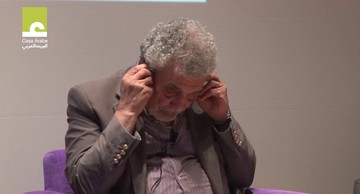
This Syrian author is presenting The Shell: Memoirs of a hidden observer in Al-Assad’s jails at Casa Árabe, along with its Spanish-language translators, Ignacio Gutiérrez de Terán and Naomí Ramírez Díaz. Mustafa Khalifa (Jarabulus, Syria, 1948) was arrested for the first time in 1979. After his second arrest in 1982, upon returning to his country after studying film in Paris, he spent thirteen years in Al-Assad’s jails, most at the military prison of Tadmur, in Palmyra. This experience forms the core of the tale that we are presenting: The Shell: Memoirs of a hidden observer in Al-Assad’s jails, translated into major languages, and achieving acknowledgments for the author, such as the Free Press Award, in 2014. In his acceptance speech for this award, the author stated, “Syrian human beings are surrounded on all sides by a wall of death, a wall raised by the fanatical forces represented by Al-Assad and Hezbollah’s militias, and the different factions of Al-Qaeda whose entry into Syria was facilitated by Al-Assad himself. Syrian human beings are beginning to lose faith in the values of freedom, justice and brotherhood which mankind has expressed throughout history... the silence over the crimes committed against Syrians are incomprehensible to them. And what is even more incomprehensible and unjustifiable is the fact that this endures without the slightest attempt to take action to put a stop to the crimes against civilians.” Presentation information sheet Tadmur Prison, built by the French government in the 1930’s, was blown up by the Islamic Army after taking over Palmyra in 2015, an action criticized by many of those who suffered in jail there. They considered it to be a symbol of oppression and slavery under the regime of the Assad dynasty. Inside its walls, the indiscriminate killing of 500 to 1,000 prisoners took place, as they were mowed down with machines guns inside their jail cells by forces under the command of Rifaat Al-Assad, Hafez Al-Assad’s brother, in response to an attack against him. More info: http://en.casaarabe.es/event/the-shell-by-mustafa-khalifaPublished at 02 13,,, 17 2017 -
Europe and the birth of Arab states in the Middle East (ENG)
04.28.2015 Conference given by Gudrun Harrer, a journalist and Middle East analyst. Casa Árabe and the Cultural Forum of Austria in Madrid present the conference “Europe and the Birth of Arab States in the Middle East After World War I,” to be presented by Peter Huber, the Ambassador of Austria in Spain, and Eduardo Lopez Busquets, General Director of Casa Árabe. One hundred years after the outbreak of World War I in 1914, the Arab nation-state system created by European powers during the post-war period is now under pressure. The self-named “Islamic State” could put an end to the current borders of the states of Iraq and Syria, which brings up the matter of where these states’ lack of resilience originates. The most frequent response is that they were created and have been maintained as “artificial” states, but this does not explain the phenomenon sufficiently. The first political decisions reached by Great Britain and France, and later by a series of undemocratic regimes, have contributed to these societies’ fragility. Dr. Gudrun Harrer is the editor of the Austrian newspaper Der Standard. She is a professor of Middle Eastern Politics and Modern History at the University of Vienna and the Diplomatic School in Vienna. She worked for her country’s government as a Special Envoy to Iraq and is the author of several books, including Dismantling the Iraqi Nuclear Programme (Routledge 2014). In 2015, she received the prestigious Bruno Kreisky Award, which acknowledges achievements in the field of human rights made by institutions or individuals. More info: http://en.casaarabe.es/event/europe-and-the-birth-of-arab-states-in-the-middle-eastPublished at 41 18,,, 17 2017 -
Turbulence in Gulf geopolitics (ENG)
Toby Matthiesen and Luciano Zaccara will be analyzing rivalries on the Arabian Peninsula at Casa Árabe. Matthiesen, main researcher at Oxford University’s Middle East Centre, and Zaccara, an assistant professor at Qatar University’s Gulf Studies Center, will be accompanied by Pedro Villena, the General Director of Casa Árabe, who is presenting the conference. The rivalries throughout the Arabian Peninsula have increased as each country struggles to create global maritime shipping centers, airlines, media outlets, expeditionary forces and financial districts. One generation ago, the Gulf was run on foundations of consensus, the main concern being stability. However, petrodollars, huge arsenals, regional wars (Syria, Yemen, Libya) and international politics –including interactions with Washington and Tehran– have changed things, and tensions are running high as of late. The plans for a Gulf Cooperation Council able to form a strong common economic and foreign policy have come into question. It is therefore a good idea to analyze whether this turbulence is a temporary phenomenon or shows signs of more long-lasting dynamics. More info: http://en.casaarabe.es/event/turbulence-in-gulf-geopoliticsPublished at 23 18,,, 17 2017 -
Women and political resistance in Yemen (ENG)
06-13-2017. Casa Árabe invited the journalist and blogger Afrah Nasser to analyze the ties linking gender, culture, Islam, power and social change in Yemen. Taking part in the conference are Afrah Nasser, a Yemeni journalist and blogger, and Leyla Hamad, a researcher for the Political and Electoral Observatory of the Arab and Muslim World (OPEMAM). The high rate of gender inequality in Yemen means that women have very few rights in terms of education, marriage and medical care, as well as other basic human rights. Moreover, the combination of statutory law, Sharia, traditional tribal practices and customary law leave women vulnerable to violence and discrimination. The current war in Yemen has sharpened these deep inequalities, all of which is made even worse by the humanitarian crisis. Nevertheless, since the popular uprising in 2011, a political culture of feminist resistance has been forming, which must be analyzed and highlighted, with the example of the Nobel Peace Prize awarded to activist Tawakkol Karman. Afrah Nasser is an independent writer and award-winning blogger whose work focuses on human rights violations, women’s rights and the politics of Yemen. She has worked as a reporter for the newspaper Yemen Observer and began her blog on the uprisings in Yemen (http://afrahnasser.blogspot.com.es) in 2011. That same year, hers was selected by CNN.com as one of the “must-read” blogs on the Middle East, and she was highlighted among the 100 most influential Arabs by the magazine Business Arabian. In 2011, she became a political refugee in Sweden, the country where she completed her graduate studies in Communication at the University of Göteborg, where she is one of the co-founders of the NGO The Yemeni Salon. More info: http://en.casaarabe.es/event/women-and-political-resistance-in-yemenPublished at 16 28,,, 17 2017 -
La vivencia cotidiana y espiritual del mes de Ramadán
Casa Árabe y el Consejo de las Comunidad de Marroquíes en el Extranjero organizaron, el 12 de junio de 2017 esta conferencia de Sanaa El Aziri en el marco del Festival Noches de Ramadán del Ayuntamiento de Madrid. ¿Qué distingue el día a día de un musulmán durante el mes de Ramadán y qué lo hace diferente de otros meses?, ¿cuáles son las dificultades para celebrar el mes de Ramadán en un país de mayoría no musulmana?. Sanaa El Aziri, doctora en Lingüística Española por la Universidad Autónoma de Madrid, analizó la vivencia cotidiana del Ramadán por parte de los musulmanes en España. Habló también de esta celebración desde la perspectiva de su diversidad étnica, cultural y religiosa, así como desde su condición “interior” en tanto que vía de espiritualidad y convivencia con la comunidad. Más información: http://www.casaarabe.es/eventos-arabes/show/la-vivencia-cotidiana-y-espiritual-del-mes-de-ramadanPublished at 42 23,,, 17 2017