

Studying in Lebanon: Challenges to Syrian Refugee Children
Published at 38 12,,, 21 2021
ALL VIDEOS IN THIS CATEGORY
-

The role of civil society and women in Syria’s reconstruction
Thinking about the Syrian crisis does not mean just talking about the conflict right now, but also what will happen “the day after.” The war has caused hundreds of thousands of victims, along with millions of internally displaced persons and refugees. When the violence eventually comes to an end and the country’s reconstruction begins, the Syrian people will need new skills to help the transition process move forward. In June 2014, the European Union launched the Tahdir Initiative (“tahdir” meaning “preparation” in Arabic) with the general objective of supporting committed Syrians in different arenas with the process of transition towards a peaceful, democratic, inclusive new Syria. Tahdir consists of educational programs, professional internships, skill-building seminars, non-academic scholarships and travel for study. At this first presentation, the highlight will be placed on the role of women and the drafting of an inclusive constitution.Published at 35 20,,, 16 2016 -
The Media (R)evolution in Egypt (in English)
Over five years have gone by since the January 25th uprising in Egypt and the overthrow of President Hosni Mubarak. At that time, the news coming in from Tahrir Square went viral on Arab and Western media platforms. The use of social networks brought to light new voices and forms of communication which challenged tradition and hierarchies, affecting media programming, from political talk shows to comedies on both private channels and public networks. After Mohamed Morsi’s short-lived presidency and general elections that brought Abdel Fattah al Sisi to power, one of the most important features of the situation in Egypt today is the atmosphere in which Egyptian media are working and the news coverage by local and foreign journalists.Published at 28 20,,, 16 2016 -
The Taliban, Al-Qaeda and Daesh: Competitors on the Jihadist stage
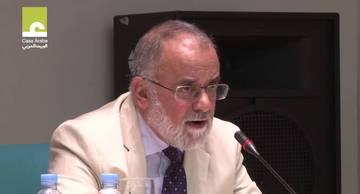
Two decades have elapsed since the Taliban appeared on the international scene, with Al-Qaeda having done so ten years later, while the heirs to violent Jihadism right now seem to consist mainly of the combatants in the self-proclaimed Islamic State. The predominance of Daesh in the media does not mean that the Taliban and Al-Qaeda remain on the sidelines, or that they are on a path to extinction. Their strategies and fighters are transforming in order to adapt to the today’s environment. Their tactics mutate as they gain or lose terrain, and their international interlocutors react to what they do. Syria, Iraq, Libya, Yemen, the Sahel and the Sinai Peninsula, but also Afghanistan and Pakistan, have all fallen prey to the fierce competition of these extremist groups, which take advantage of governments’ weakness to boost their own power. The victims of these non-state role-players’ violent extremism exist on every continent, and therefore it is essential for us to analyze these extremist groups’ latest movements. This conference, with the participation of Teresa Gutiérrez del Álamo, the director of Casa Asia’s headquarters in Madrid, and Rubén Campos, the Club de Madrid program coordinator, will be moderated by Karim Hauser, who is responsible for Casa Árabe’s Governance Area, and presided over by Ahmed Rashid, a journalist with great expertise on Central Asia and the Middle East. Also Pilar Requena, a journalist from TVE, Spain’s national public television network, took part of the conference.Published at 08 29,,, 16 2016 -
Botanical references in the Qur’an: preserving history in a world of change (in English)
With the cooperation of the CSIC and the Madrid Royal Botanical Garden, Casa Árabe has organized a conference which will give us a closer look at the Qur’an from the perspective of botany. During her conference, Shahina A. Ghazanfar, an expert on Asian plants and a researcher at the Kew Royal Botanic Gardens in London (www.kew.org/msc) will be discussing the plants mentioned in the Qur’an and some of the hadiths because they possess properties as foods or medicine, or for other historical, cultural or religious reasons. She will be talking to us about more than seventy plants, most of which have healing properties. Climate change and the human impact on nature have kept many species from being able to thrive in their original habitats. The disappearance of a species means losing the history and culture associated with the original places where these plants once lived. This makes religious texts an important source of information that can help us preserve the cultural history of plants.Published at 02 27,,, 16 2016 -
Refugees speak out (in Arabic)
On the occasion of June 20, the World Day for Refugees and the Displaced, the #YoSoyTierraDeAcogida (which roughly translates as “I am a land that takes in refugees”) initiative has been launched as a way to gain support for the manifesto demanding policies to take in refugees and respect human rights. This initiative forms part of the Hospitalidad.es campaign, which furthers the full range of social works by Jesuits in Spain and intends to contribute to promoting a culture of solidarity and inclusiveness towards all of the people who reach our borders, calling for people not to forget those who have been unable to escape from conflicts, or those currently in transit. It is a cry for taking in migrants and refugees. The event will allow people to speak out who are familiar with the process which occurs when people are forced to leave their country of origin and apply for asylum. They are the experts to whom the World Day of Refugees and the Displaced is meant to give a voice.Published at 46 20,,, 16 2016