

(FRANÇAIS) 5th Annual Forum of the MedThink 5+5 network - 13 Octobre
Published at 05 08,,, 21 2021
ALL VIDEOS IN THIS CATEGORY
-

Visions of Palmyra: Between legend and destruction (In French)
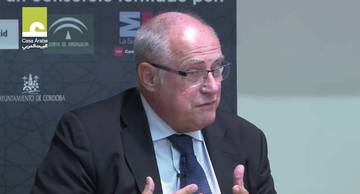
Casa Árabe and the French Institute of Madrid organized a conference about the Syrian city of Palmyra. Palmyra, an oasis city, exceptional due to its archeological remains and location, has a unique history. Despite the commotion over its recent partial destruction at the hands of Daesh and the arrival of Bashar al-Assad and his allies’ troops there, it is important to review the site’s splendorous past and current status. Three experts will be commenting on the threats which jeopardize the treasures found in this ancient city, a crossroads of influences between the Greco-Roman Mediterranean and Parthian Mesopotamia, between the sedentary cultures of Syria and the nomadic world of the desert. This conference was given by Maurice Sartre, professor emeritus of Ancient History at the University of Tours, Annie Sartre, professor emeritus of Roman History at the University of Artois, and Mario Agudo Villanueva, a journalist and historian. The event was presented and moderated by Karim Hauser, who is responsible for the Governance Area at Casa Árabe.Published at 36 14,,, 16 2016 -
Youth activism in Arab civil society
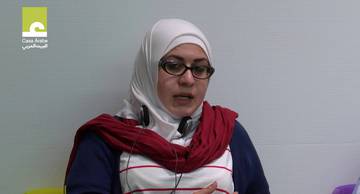
Casa Árabe and the Konrad Adenauer Foundation have organized this conference on the aspirations of Arab youths. Within the framework of the program Political Dialogue with the Southern Mediterranean launched in Tunisia by the Konrad Adenauer Foundation, a series of activities has been planned to deal with the challenges in the region on the basis of three basic pillars: transformation and economic and political cooperation; migration, and security. The role of civil society entities in the construction of democratic values is crucial at these times of transition, including the participation of youths. This is especially true during these current times of transition, when it is essential to take into account youths’ aspirations so that they may take part in the decision-making process. To achieve this, it is important to listen directly to the voices of the young Arabs involved on-site and in the field. With the participation of: Omar Assou (Morocco), Aya Chamli (Tunisia), Ghaida al Qudah (Jordan), André Sleiman (Lebanon). Moderated by: Karim Hauser, Casa ÁrabePublished at 18 25,,, 16 2016 -
Feminisms in the Arab world
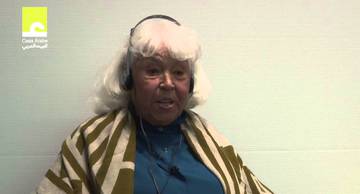
Casa Árabe and the Tres Culturas Foundation held a four-voice conversation with Nawal El-Saadawi (Egypt), a writer and feminist militant; Wassyla Tamzali (Algeria), a specialist on gender-related topics, Nieves Paradela (Spain), a professor at the Universidad Autónoma de Madrid, and Eva Lapiedra (Spain), a professor at the University of Alicante. This round table discussion analyzed the changes and developments in the Arab world’s feminist movements as of the final decades of the twentieth century, with a special focus on Egypt and Algeria. It also dealt with the current situation in the fight for women’s rights, after developments in the social and civil movements over the last five years, coupled with the complex situation through which many of today’s Arab societies are living.Published at 25 10,,, 16 2016 -
Damascus: Change and continuity in the Late Middle Ages
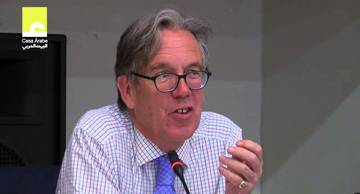
Casa Árabe and the Three Cultures of the Mediterranean Foundation, with the cooperation of the Sísifo Research Group of the Archeology Department at the University of Cordoba, have organized this conference given by Hugh Kennedy, SOAS - University of London. The conference focused on the history and topography of Damascus from the Byzantine period to the twelfth century. It will mainly deal with the importance of this city as the capital of the Umayyad Caliphate, the uprise of the Abbasid government and its negative effect on the city’s prosperity, as well as the later role played by the Seleucid dynasty. The changes in the urban street layout, the Umayyad mosque and the reconstruction of the first fortress will all be discussed. Last of all, it will deal with this historical city’s reality within the context of the twentieth and twenty-first centuries.Published at 24 10,,, 16 2016 -
Why is Daesh surviving militarily?
The conference given by Omar Ashour, a professor of Security Studies at Exeter University, along with Pedro Baños Bajo, an analyst of Strategy, Terrorism and Intelligence. Karim Hauser, esponsible for the Governance Area at Casa Árabe, presented and moderated the event. The ascent of Daesh as a dominant Jihadist organization remains a surprising phenomenon. Its degree of brutality, its sophisticated methods for attracting recruits, its propaganda offense and its ability to mutate in the field form part of a diversified strategy. However, militarily speaking, its strength and power are proportionally lesser than those of its state and non-state enemies. Despite this, compared with the Taliban regime, which fell in a campaign lasting just two months, carried out jointly by Western powers and decentralized Afghan forces, Daesh has proven to be much more resilient. How does it manage to survive?Published at 58 26,,, 16 2016