

Conferences and debates
Index / Activities / Conferences and debates / Biases and manipulation in international media coverage of the Israeli war on Gaza
Biases and manipulation in international media coverage of the Israeli war on Gaza
From April 09, 2025 until April 10, 2025In Cordoba, the event will be held on Wednesday, April 9 at 7:00 p.m. In Madrid, it will be held on Thursday, April 10, at 7:00 p.m.
MADRID, CORDOBA AND ONLINE
Casa Árabe’s headquarters in both cities (at Calle Alcalá, 62 in Madrid and Calle Samuel de los Santos Gener, 9 in Cordoba).
In Cordoba, the event will be held on Wednesday, April 9 at 7:00 p.m. In Madrid, it will be held on Thursday, April 10, at 7:00 p.m.
Free entry until the event’s capacity is reached.
In English, with simultaneous live translation into Spanish.
Professor Wesam Amer, Sean of the Gaza School of Communication and a researcher at Cambridge, will be giving the next session in the Aula Árabe Universitaria event series. In Cordoba, this is the third installment in the series and will be held on Wednesday, April 9. In Madrid, it is the twelfth conference and will be taking place one day later, on Thursday, April 10
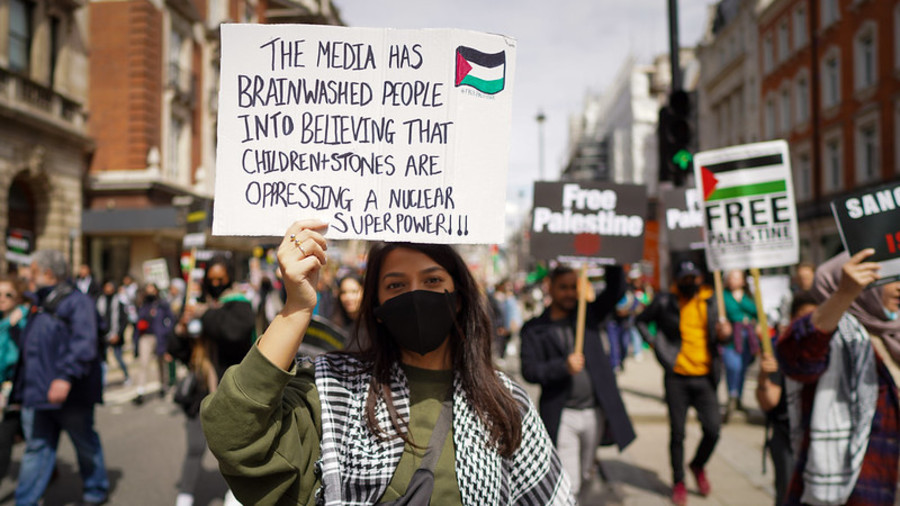
With the title “Insights from International Media Coverage of the Israeli War on Gaza 2023-2024: Public Opinion Fabrication and Western Audience Engineering,” Prof. Wesam Amer’s lecture will critically examine the role of European and North American media in shaping the public’s perception of the Gaza War from 2023-2025, highlighting the biases, misinformation and framing strategies that have influenced global narratives. Through a comparative analysis of media coverage in the United States, the United Kingdom, and Germany, the study applies critical discourse analysis to reveal systematic reporting patterns.
Its analysis shows how the so-called “Western” media have largely aligned themselves with Israeli narratives, often omitting crucial historical and geopolitical context.
Amongst the practices observed is the labeling of certain concepts by the media, such as referring to the war as “war between Israel and Hamas” versus “the Al-Aqsa deluge,” illustrating how terminology shapes audience perceptions. Another aspect that will be highlighted is the abundance of unverified information, such as widely reported but unproven claims, which contribute to a distortion of the portrayal of events.
Prof. Amer will also be showing us how the journalism in place within the region further restricts perspectives, because international journalists predominantly report from the Israeli side, while Palestinian voices and victim accounts are often questioned or minimized. His lecture will also examine recurring media framings, such as Israel’s “right to self-defense,” the portrayal of Hamas using civilians as “human shields,” and of the war as a two-sided conflict, thus minimizing the stark imbalance of power. The exclusion of terms such as “apartheid,” “ethnic cleansing” and “genocide” from the dominant discourse among these media outlets also reflects ideological influences on reporting.
Ultimately, he will be analyzing how Western media coverage has not only contributed to misinformation, but has also eroded the credibility of journalism in general. Prof. Amer will raise the importance of addressing these biases as a crucial exercise in ensuring accurate, balanced and responsible reporting on conflicts and their humanitarian consequences
CORDOBA
Organized in Cordoba with the cooperation of the bachelor’s degree program in Film and Culture at the University of Cordoba, taking part in the event in representation of these programs will be Rafael Blanco, an Art History professor from that university, which will be moderated by Javier Rosón, the manager of Casa Árabe in Cordoba.
MADRID
The Madrid event has been organized with the cooperation of the degree programs in International Relations and Communication, and T&I and Communication at the Universidad de Comillas. Taking part in representation of these programs will be Bettina Schnell, Coordinator of Foreign Languages in the Department of Translation and Interpreting and Multilingual Communication at the aforementioned university. It will be moderated by Olivia Orozco, Casa Árabe’s Training and Economics Coordinator. The event will be broadcast live on our Youtube channel.
Wesam Amer
Wesam Amer is a CARA/SRF scholar and a visiting researcher at Cambridge (UK). Since 2020, he has been Dean of the Faculty of Communication and Languages at the University of Gaza. Among other research stays, he was a Fulbright scholar and research fellow at Harvard University’s Center for Middle Eastern Studies in 2022 and a Marie Curie Fellow at Newcastle University from 2017-2020. He holds a PhD in Media Studies and Discourse Analysis from the University of Hamburg (2015), an MA in Linguistics from Anglia Ruskin University (Cambridge, UK) and a BA in English Literature and Education from Al-Azhar University in Gaza. His teaching and research interests focus on political communication, violent language, warfare and contemporary geopolitics, with a specific focus on terrorism, security and radicalization. For information on his publications and further details, please see his personal website: https://wesamamer.com/
Its analysis shows how the so-called “Western” media have largely aligned themselves with Israeli narratives, often omitting crucial historical and geopolitical context.
Amongst the practices observed is the labeling of certain concepts by the media, such as referring to the war as “war between Israel and Hamas” versus “the Al-Aqsa deluge,” illustrating how terminology shapes audience perceptions. Another aspect that will be highlighted is the abundance of unverified information, such as widely reported but unproven claims, which contribute to a distortion of the portrayal of events.
Prof. Amer will also be showing us how the journalism in place within the region further restricts perspectives, because international journalists predominantly report from the Israeli side, while Palestinian voices and victim accounts are often questioned or minimized. His lecture will also examine recurring media framings, such as Israel’s “right to self-defense,” the portrayal of Hamas using civilians as “human shields,” and of the war as a two-sided conflict, thus minimizing the stark imbalance of power. The exclusion of terms such as “apartheid,” “ethnic cleansing” and “genocide” from the dominant discourse among these media outlets also reflects ideological influences on reporting.
Ultimately, he will be analyzing how Western media coverage has not only contributed to misinformation, but has also eroded the credibility of journalism in general. Prof. Amer will raise the importance of addressing these biases as a crucial exercise in ensuring accurate, balanced and responsible reporting on conflicts and their humanitarian consequences
CORDOBA
Organized in Cordoba with the cooperation of the bachelor’s degree program in Film and Culture at the University of Cordoba, taking part in the event in representation of these programs will be Rafael Blanco, an Art History professor from that university, which will be moderated by Javier Rosón, the manager of Casa Árabe in Cordoba.
MADRID
The Madrid event has been organized with the cooperation of the degree programs in International Relations and Communication, and T&I and Communication at the Universidad de Comillas. Taking part in representation of these programs will be Bettina Schnell, Coordinator of Foreign Languages in the Department of Translation and Interpreting and Multilingual Communication at the aforementioned university. It will be moderated by Olivia Orozco, Casa Árabe’s Training and Economics Coordinator. The event will be broadcast live on our Youtube channel.
Wesam Amer
Wesam Amer is a CARA/SRF scholar and a visiting researcher at Cambridge (UK). Since 2020, he has been Dean of the Faculty of Communication and Languages at the University of Gaza. Among other research stays, he was a Fulbright scholar and research fellow at Harvard University’s Center for Middle Eastern Studies in 2022 and a Marie Curie Fellow at Newcastle University from 2017-2020. He holds a PhD in Media Studies and Discourse Analysis from the University of Hamburg (2015), an MA in Linguistics from Anglia Ruskin University (Cambridge, UK) and a BA in English Literature and Education from Al-Azhar University in Gaza. His teaching and research interests focus on political communication, violent language, warfare and contemporary geopolitics, with a specific focus on terrorism, security and radicalization. For information on his publications and further details, please see his personal website: https://wesamamer.com/