

Special programs
Index / Activities / Special programs / Conference days: “The Mark Left Behind by Ziryab”
Conference days: “The Mark Left Behind by Ziryab”
From September 18, 2025 until September 20, 2025Check dates and times for each activity.
CORDOBA
Casa Árabe, the Al-Andalus Library and the Sala Orive
Check dates and times for each activity.
In Spanish.
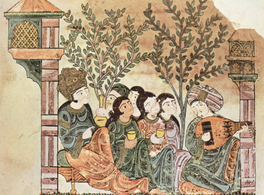
Casa Árabe and the Cordoba City Council’s Department of Culture and Historical Heritage are organizing these sessions, which will pay homage to one of the most influential cultural figures of Al-Andalus in the ninth century. It will be taking place from September 18 to 20. Don’t miss out!
Through an interdisciplinary program combining research, music and heritage, the contributions to Al-Andalus culture by musician, poet and innovator Ziryab, and his impact on Umayyad Cordoba, will be explored.
The days of events, coordinated by María Carmen Vera Martín-Peñasco and Juan Miguel Moreno Calderón, will include conferences by leading scholars and researchers, such as: María Jesús Viguera, professor emeritus (UCM), Juan Murillo Redondo, head of the Office of Archeology (GMU Córdoba), Reynaldo Fernández Manzano, director of the Musical Documentation Center of Andalusia, Manuela Cortés, tenured professor emeritus (University of Granada), Maribel Fierro, research professor (CCHS-CSIC), María Carmen Vera Martín-Peñasco, professor at the “Músico Ziryab” Professional Conservatory, and Manuela Marín, a researching professor (CSIC).
In addition, there will be presentations of publications by Manuela Cortés and Amin Chaachoo, with a musical reading of the Moorish tale titled Ziryab’s Bath performed by María Carmen Vera and Isabel Cabrera Saúco.
The program also includes two concerts, given by Amin Chaachoo – From Al-Andalus to Morocco, and by Eduardo Paniagua – Ziryab’s Legacy, with a presentation of his album Ziryab, Wine and Roses (Pneuma Music). The event also included the screening of the documentary The Rhythms of Al-Andalus.

Thursday, September 18
At Casa Árabe
5:00 p.m. Opening event for the Days
5:15 p.m. Conference Times of Ziryab: the orientation of Al-Andalus
Mª Jesús Viguera, a full professor with the Department of Arabic and Islamic Studies at the Universidad Complutense de Madrid.
6:15 p.m. Conference Ziryab, ՙAbd al-Rahman and ninth-century Córdoba
Juan Murillo Redondo, Head of the Archeology Office of the Municipal Urban Planning Department of Córdoba.
In the Orive Room
8:00 p.m. Concert by Amin Chaachoo: From Al-Andalus to Morocco.
Friday, September 19
At the Living Library of Al-Andalus
1000 a.m. Presentation of the book Artistic Activities of Andalusian and Moorish Women. Singing, Instrumentation, and Dance, by Manuela Cortés
11:00 a.m. Presentation of the book Philosophy of Al-Andalus Music, by Amin Chaachoo
11:45 a.m. A musical reading of the Moorish tale titled The Bath of Ziryab
María Carmen Vera and Isabel Cabrera Saúco.
At Casa Árabe
6:00 p.m. Conference Ziryab on the international scene of the great cultural centers of the ninth century
Reynaldo F. Manzano, Advisor to and former Director of the Andalusian Music Documentation Center.
7:00 p.m. Conference Analysis of the “fifth string (al-ḥadd)” attributed to Ziryab in the treatises of Eastern and Al-Andalus theorists (ninth-fourteenth centuries)
Manuela Cortés, Professor Emeritus with the Department of Art and Music History and the Department of Music History and Sciences at the University of Granada.
8:00 p.m. Screening of the documentary The Rhythms of Al-Andalus, by Mona Abudiab, a journalist with Sky News Arabia.
This documentary, produced and broadcast by Sky News Arabia, won two international Telly Awards in 2024, in the categories of culture and lifestyle, awards given after judging by companies including Shutterstock, Marvel, BBC and Netflix, as well as others.
Saturday, September 20
At Casa Árabe
10:00 a.m. Conference Knowledgeable people who emigrated to Al-Andalus in the first half of the ninth century,
Maribel Fierro, researching professor at the Institute of Mediterranean Languages and Cultures (CCHS-CSIC).
11:00 a.m. Conference From East to West: The musician Ziryab and his contributions to the city of Córdoba
María Carmen Vera Martín-Peñasco, professor at the “Músico Ziryab” Professional Conservatory of Music of Córdoba and a PhD student at the University of Córdoba.
12:30 p.m. Conference Ziryab and the music of the court
Manuela Marín, researching professor at the Spanish National Research Council.
In the Orive Room
7:30 p.m. Presentation of the full album history of Eduardo Paniagua (Pneuma Music):
Ziryab, Wine and Roses.
8:30 p.m. Concert by Eduardo Paniagua, Ziryab’s Legacy.
At Casa Árabe
5:00 p.m. Opening event for the Days
5:15 p.m. Conference Times of Ziryab: the orientation of Al-Andalus
Mª Jesús Viguera, a full professor with the Department of Arabic and Islamic Studies at the Universidad Complutense de Madrid.
6:15 p.m. Conference Ziryab, ՙAbd al-Rahman and ninth-century Córdoba
Juan Murillo Redondo, Head of the Archeology Office of the Municipal Urban Planning Department of Córdoba.
In the Orive Room
8:00 p.m. Concert by Amin Chaachoo: From Al-Andalus to Morocco.
Friday, September 19
At the Living Library of Al-Andalus
1000 a.m. Presentation of the book Artistic Activities of Andalusian and Moorish Women. Singing, Instrumentation, and Dance, by Manuela Cortés
11:00 a.m. Presentation of the book Philosophy of Al-Andalus Music, by Amin Chaachoo
11:45 a.m. A musical reading of the Moorish tale titled The Bath of Ziryab
María Carmen Vera and Isabel Cabrera Saúco.
At Casa Árabe
6:00 p.m. Conference Ziryab on the international scene of the great cultural centers of the ninth century
Reynaldo F. Manzano, Advisor to and former Director of the Andalusian Music Documentation Center.
7:00 p.m. Conference Analysis of the “fifth string (al-ḥadd)” attributed to Ziryab in the treatises of Eastern and Al-Andalus theorists (ninth-fourteenth centuries)
Manuela Cortés, Professor Emeritus with the Department of Art and Music History and the Department of Music History and Sciences at the University of Granada.
8:00 p.m. Screening of the documentary The Rhythms of Al-Andalus, by Mona Abudiab, a journalist with Sky News Arabia.
This documentary, produced and broadcast by Sky News Arabia, won two international Telly Awards in 2024, in the categories of culture and lifestyle, awards given after judging by companies including Shutterstock, Marvel, BBC and Netflix, as well as others.
Saturday, September 20
At Casa Árabe
10:00 a.m. Conference Knowledgeable people who emigrated to Al-Andalus in the first half of the ninth century,
Maribel Fierro, researching professor at the Institute of Mediterranean Languages and Cultures (CCHS-CSIC).
11:00 a.m. Conference From East to West: The musician Ziryab and his contributions to the city of Córdoba
María Carmen Vera Martín-Peñasco, professor at the “Músico Ziryab” Professional Conservatory of Music of Córdoba and a PhD student at the University of Córdoba.
12:30 p.m. Conference Ziryab and the music of the court
Manuela Marín, researching professor at the Spanish National Research Council.
In the Orive Room
7:30 p.m. Presentation of the full album history of Eduardo Paniagua (Pneuma Music):
Ziryab, Wine and Roses.
8:30 p.m. Concert by Eduardo Paniagua, Ziryab’s Legacy.
Isabel Cabrera Saúco
She holds a degree in Concert Flute and a university degree in History and Music Sciences from the University of La Rioja. She works as a professor of Music History in the Music and Performing Arts faculty of the Regional Government of Andalusia. She also works at the Ángel Barrios Professional Conservatory of Music in the city of Granada. She has been invited by the Teacher Training Centers of Algeciras-La Línea (Cádiz) and Motril (Granada) to give a course on Key Skills and Project-Based Learning in Music Education. She belongs to a commission on Music and women: gender studies run by the Spanish Society of Musicology. Recently, she has been working to highlight the figure of María Lejárraga, along with her ties to Manuel de Falla and other performers, thus participating in the cultural events put on by the company Granada Singular. She currently specializes in playing medieval musical instruments (Arabic oud, recorders, psaltery, hurdy-gurdy and cittern), performing with different groups such as Xauen Lírica, Al cor Gentil and La nuba Gharnatí.
Manuela Cortés
An Arabist, researcher, teacher and cultural manager, she holds a PhD in Semitic Philology: Arabic and Islam, from the Universidad Autónoma de Madrid (1996). A full member of the Academy of Andalusian History (Seville, 2017), she has taught at the Universities of Cairo (1995-1998), at the Cervantes Institutes in Baghdad and Cairo (1987; 1996-2000) and at the University of Granada (2005-2022). Her lines of research include Arabic and Al-Andalus music and literature: Arabic documentary sources; Arabic and Andalusian theorists; Music and interdisciplinarity; Sufism; Gender issues; Iconographic art and Archeo-musicology. She has authored various scientific works, including Artistic Activities of Andalusian and Moorish Women. Singing, Instrumentation and Dance (2022); as well as works of poetry, novels, travel literature, translations and studies of contemporary Arabic poetry. She has published more than a hundred scientific articles and participated in congresses and conferences, as well as contributing to media outlets in Spain and countries in the Middle East and the Maghreb. A contributor to recording projects, magazines and foundations, she has also been a cultural manager, organizer of exhibitions, conferences, seminars and workshops on literature, music and the cultural relations between Spain and Arab countries.
Amin Chaachoo (Tetouan, Morocco) is a musician and musicologist specializing in Modal Music. He was chosen by the Board of Directors of the CIHAR Spanish-Arab Intercultural Circle in Madrid to receive the CIHAR Gold Medal in 2019. He founded the al-Haiek Association for Research into Al-Andalus Musical Heritage. He founded the Tetouan-Asmir Music Club, which specializes in the teaching and dissemination of Al-Andalus music, and the Founoun Music Conservatory, where he taught Andalusi music for many years. He created the Tetouan-Asmir Center for Musicology Research and the Preservation of Musical Heritage, a center devoted to promoting musicology and musicological education. He also founded the first Andalusi music orchestra made up of Spanish musicians in Malaga: the Andalusi Orchestra of Malaga.
His musicology research covers the fields of history, aesthetics, music theory, literature, music philosophy and music computing
Reynaldo Fernández Manzano
With a PhD and a university degree in Medieval History from the University of Granada, as well as studies in Arabic, he studied music at the Royal Conservatory of Granada and furthered his education in Paris. A specialist in the music of Al-Andalus and the Moriscos, he has supervised several doctoral theses and curated exhibitions, and is the author of numerous books and articles appearing in scientific journals. He has been the Director General of the Alhambra and Generalife Board of Trustees, director since its creation of the Andalusian Music Documentation Center and the Spanish Music Festival of Cádiz, President of the Spanish Association of Music Documentation, Vice-President of the Center for Byzantine, Post-Byzantine, Neo-Greek and Cypriot Studies, Secretary of the Barenboim-Said Foundation, Vice-President of the Rodríguez Acosta Foundation, Vice-President of the Picasso Museum in Malaga, Director General of Heritage Institutions with the Department of Culture of the Autonomous Regional Government of Andalusia, a professor at the International University of Andalusia and the Doctorate Program in Art and Humanities at the University of Granada. He has given lectures at several universities (the Universidad Complutense de Madrid, Universidad Autónoma de Madrid, the Universities of Rome, Paris, Lisbon, New York, Beirut, Asilah, Tetouan, Tlemcen) and has been awarded various prizes,etc.
Maribel Fierro
A researching professor at the Institute of Mediterranean Languages and Cultures (CCHS-CSIC). She works on the political, social and intellectual history of pre-modern Islamic societies, especially in the Islamic West (North Africa and the Iberian Peninsula). She has authored works which include the following: Abdarramán III y el califato omeya de Córdoba (Abderrahman II and the Umayyad Caliphate in Cordoba, Nerea, 2011). She is the editor of the popular science magazine Al-Ándalus y la Historia (Al-Andalus and History). Further information on the professor by clicking on this link.
Manuela Marín
She was a researching professor at the Spanish National Research Council (CSIC) until her retirement. She has worked on the history of Al-Andalus, particularly its social and cultural aspects, with a focus on the history of women. She has authored many articles in domestic and foreign journals, as well as monographs on these and other research topics.
Eduardo Paniagua
An architect and specialist in medieval Spanish music. At the age of 16, he recorded his first four albums. A founding member of the groups Atrium Musicae, Cálamus and Hoquetus, he specializes in Moorish-Arab music from Al-Andalus. In 1994, he created the groups Música Antigua and Ibn Bàya, for musical work on the Canticles of King Alfonso X and Andalusi music, respectively. At the same time, he founded and runs the record label PNEUMA. For his work and for the dissemination of this unpublished music, he is receiving excellent reviews and international awards.
María Jesús Viguera
With a PhD in Arabic Philology (Universidad Complutense de Madrid, 1973, Special Degree Award). Doctorate Honoris Causa (University of Granada, 2018). Professor at the following universities: Universidad Autónoma de Madrid, the University of Zaragoza, and the Universidad Complutense, where she was a full professor (as of 1983), then professor emeritus (2015-18), and now honorary professor in the Department of Arabic and Islamic Studies, which she directed for twelve years. Member of Spain’s Royal Academy of History and four other academies, including Cordoba’s. She has authored some 400 publications, as well as co-authoring and coordinating four volumes (eleventh-fourteenth centuries) of Menéndez Pidal’s History of Spain. RAH admittance speech: The Arab Manuscripts in Spain: their history and History in general (Madrid, 2016); in the RAEX: Andalusi Episodes in Extremadura (Trujillo, 2017).
She holds a degree in Concert Flute and a university degree in History and Music Sciences from the University of La Rioja. She works as a professor of Music History in the Music and Performing Arts faculty of the Regional Government of Andalusia. She also works at the Ángel Barrios Professional Conservatory of Music in the city of Granada. She has been invited by the Teacher Training Centers of Algeciras-La Línea (Cádiz) and Motril (Granada) to give a course on Key Skills and Project-Based Learning in Music Education. She belongs to a commission on Music and women: gender studies run by the Spanish Society of Musicology. Recently, she has been working to highlight the figure of María Lejárraga, along with her ties to Manuel de Falla and other performers, thus participating in the cultural events put on by the company Granada Singular. She currently specializes in playing medieval musical instruments (Arabic oud, recorders, psaltery, hurdy-gurdy and cittern), performing with different groups such as Xauen Lírica, Al cor Gentil and La nuba Gharnatí.
Manuela Cortés
An Arabist, researcher, teacher and cultural manager, she holds a PhD in Semitic Philology: Arabic and Islam, from the Universidad Autónoma de Madrid (1996). A full member of the Academy of Andalusian History (Seville, 2017), she has taught at the Universities of Cairo (1995-1998), at the Cervantes Institutes in Baghdad and Cairo (1987; 1996-2000) and at the University of Granada (2005-2022). Her lines of research include Arabic and Al-Andalus music and literature: Arabic documentary sources; Arabic and Andalusian theorists; Music and interdisciplinarity; Sufism; Gender issues; Iconographic art and Archeo-musicology. She has authored various scientific works, including Artistic Activities of Andalusian and Moorish Women. Singing, Instrumentation and Dance (2022); as well as works of poetry, novels, travel literature, translations and studies of contemporary Arabic poetry. She has published more than a hundred scientific articles and participated in congresses and conferences, as well as contributing to media outlets in Spain and countries in the Middle East and the Maghreb. A contributor to recording projects, magazines and foundations, she has also been a cultural manager, organizer of exhibitions, conferences, seminars and workshops on literature, music and the cultural relations between Spain and Arab countries.
Amin Chaachoo (Tetouan, Morocco) is a musician and musicologist specializing in Modal Music. He was chosen by the Board of Directors of the CIHAR Spanish-Arab Intercultural Circle in Madrid to receive the CIHAR Gold Medal in 2019. He founded the al-Haiek Association for Research into Al-Andalus Musical Heritage. He founded the Tetouan-Asmir Music Club, which specializes in the teaching and dissemination of Al-Andalus music, and the Founoun Music Conservatory, where he taught Andalusi music for many years. He created the Tetouan-Asmir Center for Musicology Research and the Preservation of Musical Heritage, a center devoted to promoting musicology and musicological education. He also founded the first Andalusi music orchestra made up of Spanish musicians in Malaga: the Andalusi Orchestra of Malaga.
His musicology research covers the fields of history, aesthetics, music theory, literature, music philosophy and music computing
Reynaldo Fernández Manzano
With a PhD and a university degree in Medieval History from the University of Granada, as well as studies in Arabic, he studied music at the Royal Conservatory of Granada and furthered his education in Paris. A specialist in the music of Al-Andalus and the Moriscos, he has supervised several doctoral theses and curated exhibitions, and is the author of numerous books and articles appearing in scientific journals. He has been the Director General of the Alhambra and Generalife Board of Trustees, director since its creation of the Andalusian Music Documentation Center and the Spanish Music Festival of Cádiz, President of the Spanish Association of Music Documentation, Vice-President of the Center for Byzantine, Post-Byzantine, Neo-Greek and Cypriot Studies, Secretary of the Barenboim-Said Foundation, Vice-President of the Rodríguez Acosta Foundation, Vice-President of the Picasso Museum in Malaga, Director General of Heritage Institutions with the Department of Culture of the Autonomous Regional Government of Andalusia, a professor at the International University of Andalusia and the Doctorate Program in Art and Humanities at the University of Granada. He has given lectures at several universities (the Universidad Complutense de Madrid, Universidad Autónoma de Madrid, the Universities of Rome, Paris, Lisbon, New York, Beirut, Asilah, Tetouan, Tlemcen) and has been awarded various prizes,etc.
Maribel Fierro
A researching professor at the Institute of Mediterranean Languages and Cultures (CCHS-CSIC). She works on the political, social and intellectual history of pre-modern Islamic societies, especially in the Islamic West (North Africa and the Iberian Peninsula). She has authored works which include the following: Abdarramán III y el califato omeya de Córdoba (Abderrahman II and the Umayyad Caliphate in Cordoba, Nerea, 2011). She is the editor of the popular science magazine Al-Ándalus y la Historia (Al-Andalus and History). Further information on the professor by clicking on this link.
Manuela Marín
She was a researching professor at the Spanish National Research Council (CSIC) until her retirement. She has worked on the history of Al-Andalus, particularly its social and cultural aspects, with a focus on the history of women. She has authored many articles in domestic and foreign journals, as well as monographs on these and other research topics.
Eduardo Paniagua
An architect and specialist in medieval Spanish music. At the age of 16, he recorded his first four albums. A founding member of the groups Atrium Musicae, Cálamus and Hoquetus, he specializes in Moorish-Arab music from Al-Andalus. In 1994, he created the groups Música Antigua and Ibn Bàya, for musical work on the Canticles of King Alfonso X and Andalusi music, respectively. At the same time, he founded and runs the record label PNEUMA. For his work and for the dissemination of this unpublished music, he is receiving excellent reviews and international awards.
María Jesús Viguera
With a PhD in Arabic Philology (Universidad Complutense de Madrid, 1973, Special Degree Award). Doctorate Honoris Causa (University of Granada, 2018). Professor at the following universities: Universidad Autónoma de Madrid, the University of Zaragoza, and the Universidad Complutense, where she was a full professor (as of 1983), then professor emeritus (2015-18), and now honorary professor in the Department of Arabic and Islamic Studies, which she directed for twelve years. Member of Spain’s Royal Academy of History and four other academies, including Cordoba’s. She has authored some 400 publications, as well as co-authoring and coordinating four volumes (eleventh-fourteenth centuries) of Menéndez Pidal’s History of Spain. RAH admittance speech: The Arab Manuscripts in Spain: their history and History in general (Madrid, 2016); in the RAEX: Andalusi Episodes in Extremadura (Trujillo, 2017).
Related content
Anterior
Siguiente

Conference days: “The Mark Left Behind by Ziryab”
Casa Árabe and the Cordoba City Council’s Department of Culture and
Historical Heritage are organizing these sessions, which will pay homage
to one of the most influential cultural figures of Al-Andalus in the
ninth century. It will be taking place from September 18 to 20. Don’t
miss out!
From September 18, 2025 until September 20, 2025
CORDOBA