

Conferences and debates
Index / Activities / Conferences and debates / Feminist figures and movements in the Levant, nineteenth-twentieth centuries
Feminist figures and movements in the Levant, nineteenth-twentieth centuries
December 02, 20256:00 p.m.
MADRID
Casa Árabe Auditorium (at Calle Samuel de los Santos Gener, 9). 6:00 p.m. Free entry until the event’s capacity is reached.
6:00 p.m.
Free entry until the event’s capacity is reached.
In Spanish and French, with simultaneous translation.
On Tuesday, December 2, the second conference in our Aula Árabe Universitaria 7 series will be taking place in Cordoba. René Otayek, emeritus research director in Political Science at the CNRS (France), will take a look back at the struggles by the brave women who shook up the patriarchal order in the Middle East. Come listen to him or watch the event live on YouTube (in Spanish or French).
From a Western perspective, Arab or Muslim women can be nothing more than submissive, reclusive and veiled, fated to do nothing but procreate and take care of their family life. This viewpoint is not much better when it comes to Arab and Muslim societies in general, where the decline of secular ideologies and the widespread dissemination of fundamentalist religious models inspired by Sunni and Shiite Islam fuel discourses and practices of female subordination, and even justify their total invisibility, as in Afghanistan. On both sides, it seems to have been forgotten that these societies, since the second half of the nineteenth century, have seen the emergence of female figures committed to the struggle for women’s rights.
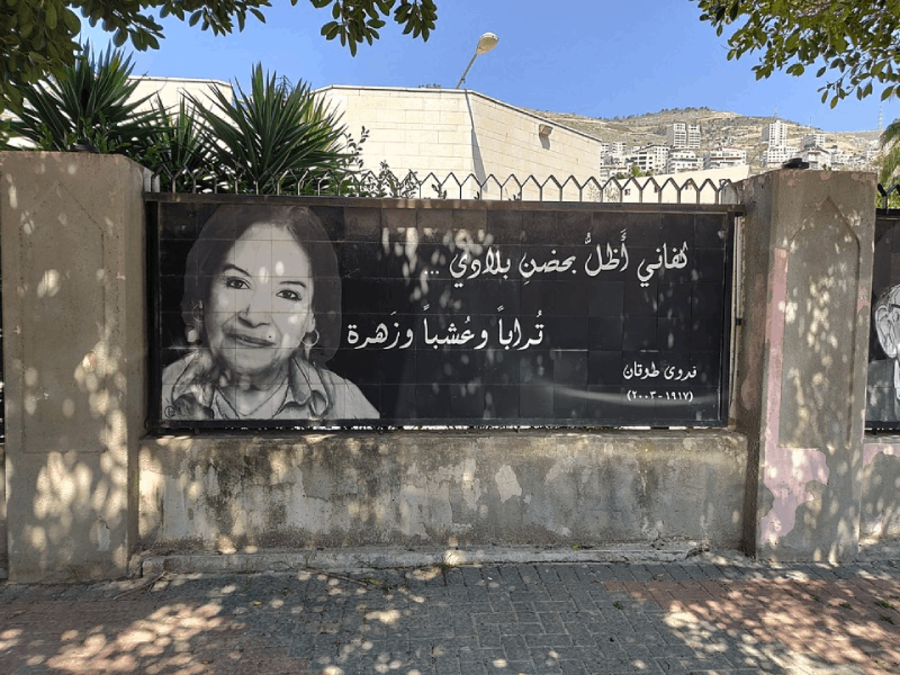
This dynamic was particularly strong in the Middle East, with extraordinary female fighters—both Muslim and Christian—including the Egyptians Houda Chaaraoui, Malak Hifni Nassi and Nabawiyya Musa, and the Lebanese or Syrian-Lebanese Marie Ajami, Zaynab Fawwaz, Maryana Marrach, May Ziadé and Afifa Karam. These pioneering women were followed by a new generation of Levantine feminists, like the Palestinians Fadwa Touqan and Mai Masri, Egypt’s Nawal al-Saadaoui, Lebanon’s Anbara Salam Khalidi, Laure Moghaizel and Jocelyne Saab, the Syrian Nazik al-Abid, and the Iraqi Nazik al-Malaika.
History has preserved the names of some but has forgotten many others. This conference by René Otayek, emeritus research director in political science at the CNRS (France), will provide an opportunity to remember the struggles by these courageous women who shook up the patriarchal order in the Middle East.
Organized with the cooperation of the Bachelor’s degree in International Relations (Loyola University). Representing the bachelor’s degree program will be the speaker María Ángeles Alaminos Hervás, a professor of International Relations at that university. She will also introduce the main speaker. Moderating the session will be Javier Rosón, Casa Árabe’s Coordinator in Cordoba.
René Otayek
René Otayek is a French political scientist and scholar who specializes in studying political, religious, and identity-based dynamics in sub-Saharan Africa and the Arab world. His work focuses on the relationship between Islam and politics, processes of religious mobilization, and state transformations in African and Arab contexts.
He has spent his career in academia as a professor and researcher at Sciences Po Bordeaux, where he also directed the Centre d’Études d’Afrique Noire (CEAN) and later the Les Afriques dans le Monde (LAM) laboratory.
The author and co-author of numerous publications, he has made significant contributions to understanding religious and political pluralism in Africa, as well as the interactions between Islam, globalization and modern life.
His work has been widely cited in the field of political science and African studies, and he has collaborated as a consultant with international organizations such as the UNDP, the World Bank and the French Ministry of Foreign Affairs.
Photo: Drawing of Fadwa Toukan’s face with a verse from her poetry painted on a wall in a public square near the municipal stadium and Gamal Abdel Nasser Park in downtown Nablus.