

Books and publications
Index / Activities / Books and publications / Gaza: Poems to Fight Genocide
Gaza: Poems to Fight Genocide
November 05, 20257:00 p.m.
MADRID
Casa Árabe Auditorium (at Calle Alcalá, 62).
7:00 p.m.
Free entry until the event’s capacity is reached.
In Spanish and Arabic, with simultaneous translation.
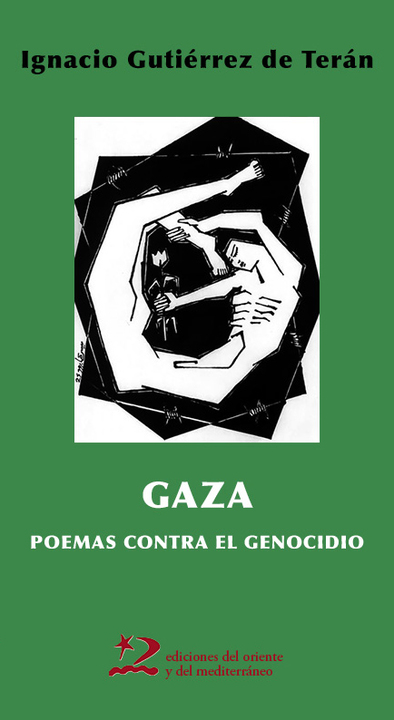
On Wednesday, November 5, in Madrid, Casa Árabe and the Ediciones del Oriente y del Mediterráneo publishing firm will be presenting an anthology of poems written in recent months by thirty young Palestinian poets, including both women and men, as the killing in the Gaza Strip and the violent expansion of illegal settlements in the West Bank continue. The event will feature four of these poets and the work’s translator, Ignacio Gutiérrez de Terán. Come listen to their talk.
This anthology brings together poems written by fifteen women and fifteen men, most of them youths and quite young poets, often published on social media or simply submitted as voice messages, as they faced a campaign of extermination and collective punishment by Israel, of unprecedented proportions.
“How painful it is to compile an anthology like this. Palestine, Gaza in a brutal manner and before the helpless gaze of half the world, the West Bank, surreptitiously through the relentless expansion of the settlers, continues to suffer a campaign of eradication. It is relentless aggression that has been going on for more than 75 years. The campaign of physical and cultural extermination undertaken in a Zionist project carried out with precise brutality has entered a “final solution” stage that we thought had been left behind in the annals of the last century.” From the introduction by Ignacio Gutiérrez de Terán.
Taking part in the event are poets Mona Musaddar, Doha Al Kahlut, Fatena al Ghorra and Mohamed Wadah Abujami, reciting a selection of poems, along with Ignacio Gutiérrez de Terán. Reading in Spanish will be Irene Maquieira, Covadonga Murias, José F. Ramos and Diego Vara. The event will be introduced by Karim Hauser, Casa Árabe’s Culture Coordinator.
The event is the result of cooperation between the Autonomous University of Madrid, Amnesty International-Madrid, the Center for Contemporary Arab Studies (CEARC) and the Spanish Society of Arabic Language Teachers (SEDLA).
The event will be shown live on our YouTube channel.
“How painful it is to compile an anthology like this. Palestine, Gaza in a brutal manner and before the helpless gaze of half the world, the West Bank, surreptitiously through the relentless expansion of the settlers, continues to suffer a campaign of eradication. It is relentless aggression that has been going on for more than 75 years. The campaign of physical and cultural extermination undertaken in a Zionist project carried out with precise brutality has entered a “final solution” stage that we thought had been left behind in the annals of the last century.” From the introduction by Ignacio Gutiérrez de Terán.
Taking part in the event are poets Mona Musaddar, Doha Al Kahlut, Fatena al Ghorra and Mohamed Wadah Abujami, reciting a selection of poems, along with Ignacio Gutiérrez de Terán. Reading in Spanish will be Irene Maquieira, Covadonga Murias, José F. Ramos and Diego Vara. The event will be introduced by Karim Hauser, Casa Árabe’s Culture Coordinator.
The event is the result of cooperation between the Autonomous University of Madrid, Amnesty International-Madrid, the Center for Contemporary Arab Studies (CEARC) and the Spanish Society of Arabic Language Teachers (SEDLA).
The event will be shown live on our YouTube channel.
Book cover
Fatena Al Ghorra is a Palestinian poet, translator and journalist. A refugee in Brussels for fifteen years, she obtained Belgian nationality in 2016. In October 2023, she returned to Gaza to visit her family and, after the outbreak of the conflict, was displaced along with her elderly parents to different areas within the Gaza Strip before being evacuated back to Brussels by Belgian diplomats . From Gaza, she spoke about her people’s tragedy using Facebook. She authored the poetry book Except Me, translated as “Excepto yo” into Spanish by Rosa Martínez Lillo (Editorial Gaviero, 2010), and her work has also been translated into Italian and Dutch. A well-known defender of women’s rights and a leading figure in Palestinian feminism, her career was analyzed in the article “Fatena al Ghorra, a very seditious woman” by Abdullah al Amar, which was presented at the Second International Congress of Women Writers and Writings (Seville, 2015).
Doha Al Kahlut is a Palestinian Arabic language teacher and poet. Her family comes from the village of Naalia, which was destroyed by Zionist militias in 1948, forcing her grandparents to take refuge in the al Shati’ camp near the Gaza coast. During the recent Israeli offensive, her family was displaced again, this time to Deir al-Balah in the south. In 2018, she had her first poetry book published, Ashbah (Similes), and she contributed to the anthologies Gazza, Ard al qasida (2021), Bijatt al saqr (2024) and A hunaka hayat qabla al mawt (2025). Her writing deals with memory, loss, and resistance. She has had articles published in Arab and international media and, after receiving a scholarship from Reid Hall, moved to Paris, where she continues her literary work. In April 2025, she was evacuated by the French embassy as the conflict grew worse in Gaza.
Mona Musaddar is a Palestinian poet, translator and researcher. She holds a bachelor’s degree in English from Al-Aqsa University and a Master’s degree in Comparative Literature and Visual Arts from the Doha Institute for Graduate Studies, which she earned with the help of a scholarship for academic excellence. She has authored three poetry books: Auddu jutai (I Count My Steps), Liannani akhsha al dhakira fi Gazza (Because I Fear My Memories in Gaza) and Awyih (Faces), the last of which is described as a “Palestinian mosaic about Gaza and life amid wars and salvation.” Her poems, written during the onslaught against Gaza, have been translated and published in several anthologies. She contributes to several media outlets, including Fusha 48. She translates her work into English and is preparing a thesis on Gazan’s peasant diaspora. She also promotes cultural and educational projects, like her project to teach tatreez, and she took part in TEDx Doha with a talk on translating the Palestinian home.
Mohamed Wadah Abujami is a poet and storyteller from Khan Yunis. He studied Law at the University of Palestine. He has contributed at numerous literary conferences and workshops in the Arab world and Turkey, where he lived for some time. He has had regular publications in the literary inserts included with many different Arab newspapers. He has been living in Belgium since 2022, where he arrived after crossing the Mediterranean on a small boat, like so many other displaced people from Gaza. He currently has refugee status. Several collections of his poetry have been published in Arabic, the best known being “A World Inflated with Botox” (Beirut, 2023). Some of his poems have been translated into English (Wednesday Poetry: A Poem by Wadah Abu Jami).
Ignacio Gutiérrez de Terán is a professor of Arabic and Islamic Studies at the Universidad Autónoma de Madrid. He specializes in contemporary history of the Arab and Islamic world and political transitions in the Middle East. His publications include Yemen, la clave olvidada del mundo árabe (Yemen, the forgotten key to the Arab world) (2014), Las revoluciones árabes: relato de un proceso en desarrollo (The Arab revolutions: account of an ongoing process) (2017), and Qatar. La perla del Golfo (Qatar: The Pearl of the Gulf) (2022). He also works as a translator from Arabic, with titles such as Los susurros de las estrellas (The Whispers of the Stars) (2021) by Naguib Mahfouz. He is a member of the editorial board of the magazine Nación Árabe and president of the Spanish Society of Arabic Language Teachers (SEDLA).
Doha Al Kahlut is a Palestinian Arabic language teacher and poet. Her family comes from the village of Naalia, which was destroyed by Zionist militias in 1948, forcing her grandparents to take refuge in the al Shati’ camp near the Gaza coast. During the recent Israeli offensive, her family was displaced again, this time to Deir al-Balah in the south. In 2018, she had her first poetry book published, Ashbah (Similes), and she contributed to the anthologies Gazza, Ard al qasida (2021), Bijatt al saqr (2024) and A hunaka hayat qabla al mawt (2025). Her writing deals with memory, loss, and resistance. She has had articles published in Arab and international media and, after receiving a scholarship from Reid Hall, moved to Paris, where she continues her literary work. In April 2025, she was evacuated by the French embassy as the conflict grew worse in Gaza.
Mona Musaddar is a Palestinian poet, translator and researcher. She holds a bachelor’s degree in English from Al-Aqsa University and a Master’s degree in Comparative Literature and Visual Arts from the Doha Institute for Graduate Studies, which she earned with the help of a scholarship for academic excellence. She has authored three poetry books: Auddu jutai (I Count My Steps), Liannani akhsha al dhakira fi Gazza (Because I Fear My Memories in Gaza) and Awyih (Faces), the last of which is described as a “Palestinian mosaic about Gaza and life amid wars and salvation.” Her poems, written during the onslaught against Gaza, have been translated and published in several anthologies. She contributes to several media outlets, including Fusha 48. She translates her work into English and is preparing a thesis on Gazan’s peasant diaspora. She also promotes cultural and educational projects, like her project to teach tatreez, and she took part in TEDx Doha with a talk on translating the Palestinian home.
Mohamed Wadah Abujami is a poet and storyteller from Khan Yunis. He studied Law at the University of Palestine. He has contributed at numerous literary conferences and workshops in the Arab world and Turkey, where he lived for some time. He has had regular publications in the literary inserts included with many different Arab newspapers. He has been living in Belgium since 2022, where he arrived after crossing the Mediterranean on a small boat, like so many other displaced people from Gaza. He currently has refugee status. Several collections of his poetry have been published in Arabic, the best known being “A World Inflated with Botox” (Beirut, 2023). Some of his poems have been translated into English (Wednesday Poetry: A Poem by Wadah Abu Jami).
Ignacio Gutiérrez de Terán is a professor of Arabic and Islamic Studies at the Universidad Autónoma de Madrid. He specializes in contemporary history of the Arab and Islamic world and political transitions in the Middle East. His publications include Yemen, la clave olvidada del mundo árabe (Yemen, the forgotten key to the Arab world) (2014), Las revoluciones árabes: relato de un proceso en desarrollo (The Arab revolutions: account of an ongoing process) (2017), and Qatar. La perla del Golfo (Qatar: The Pearl of the Gulf) (2022). He also works as a translator from Arabic, with titles such as Los susurros de las estrellas (The Whispers of the Stars) (2021) by Naguib Mahfouz. He is a member of the editorial board of the magazine Nación Árabe and president of the Spanish Society of Arabic Language Teachers (SEDLA).