

Conferences and debates
Index / Activities / Conferences and debates / Monastic architecture of Hispania at the crossroads in 711: A needed look back
Monastic architecture of Hispania at the crossroads in 711: A needed look back
October 28, 2025 6:00 p.m.
CORDOBA
Casa Árabe Auditorium (at Calle Samuel de los Santos Gener, 9).
6:00 p.m.
Free entry until the event’s capacity is reached.
In Spanish.
On Tuesday, October 28, we will be hosting the first conference in Cordoba within our Aula Árabe Universitaria 7 event series, given by Francisco Moreno, a professor of Art History at the Universidad Complutense de Madrid. If you are excited about history and heritage, come listen to him or watch our live broadcast on YouTube.
Monasticism, both in its spiritual and material forms, played an essential role in the development of Christian communities during the early Middle Ages in Spain. However, knowledge about pre-Benedictine monastic architecture remains quite limited.
One of the main reasons for this situation is the excessive reliance on documentary sources, which has affected the ways in which research is approached for decades. Despite the remarkable advancements in archeology over the last few years, a strong model has not yet been developed that might allow us to fully grasp the patterns in which cenobitic communities take hold and develop.
The chronological imbalance found in written sources has also contributed to creating large gaps in our knowledge about the evolution of these communities, especially during the eighth century and, in particular, in southern Al-Andalus. During his talk, Francisco Moreno, a professor of Art History at the Universidad Complutense de Madrid, will be perform a critical review of the current state of studies, and then proposing new methodological strategies aimed at a more thorough understanding of the monastic phenomenon in early medieval Hispania.
Speaking after his intervention will be Ángel Ventura, a professor and Department Chair of Archeology at the University of Cordoba, and Manuel Cobo, founder and director of Salsum Arqueología y Turismo. They will be presenting the results of the Preventive Archeological Activity carried out from 2024 to 2025 on the land affected by the road construction project known as the “Ronda Norte de Córdoba.”
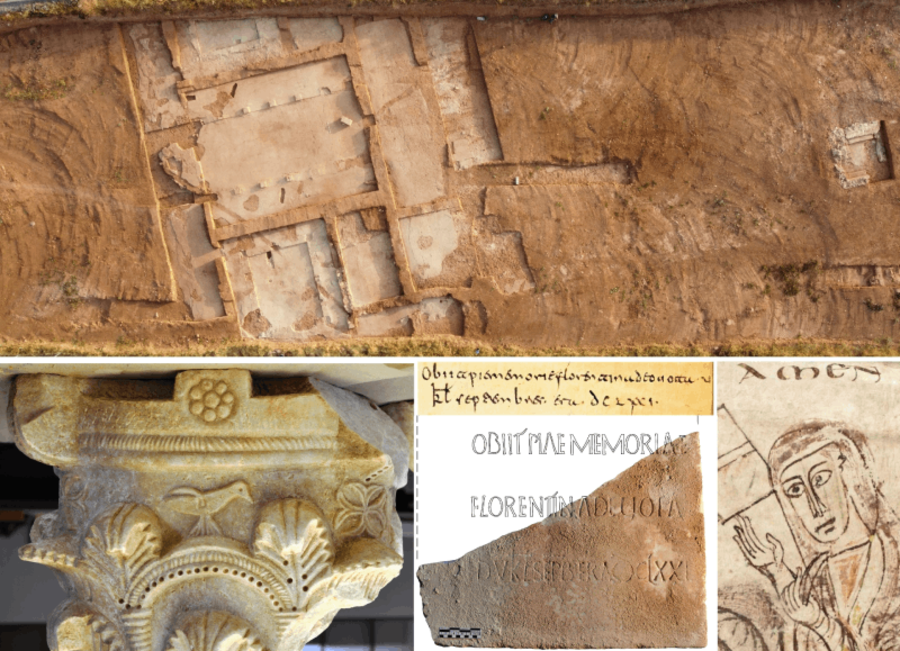
The excavations, between the Glorieta Académica García Moreno and the Glorieta de Santa Beatriz roundabouts, carried out under the technical direction of the company Salsum Consultoría y Servicios Arqueológicos, have brought to light important remains of furniture, including decorative sculptural elements and epigraphic pieces, as well as buildings, such as architectural structures that make up a Christian worship complex dating from some time between Late Antiquity and the Emirate period. An analysis of these findings has led to the suggestion that they may be related with the Basilica of Santa Eulalia in Mérida, mentioned by Mozarabic writers from Cordoba. If this hypothesis is confirmed, it would be a discovery of major importance to the study of sacred topography and monasticism in early medieval Cordoba.
Organized with the cooperation of the bachelor’s degree program in Art History and the Master’s degree in Heritage Management at the University of Cordoba, in representation of these programs, the following speaker will then be introduced, Rafael Blanco, an Art History professor at the University of Cordoba. Moderating the session will be Javier Rosón, the manager of Casa Árabe in Cordoba.
Francisco Moreno
Francisco Moreno is a professor at the Universidad Complutense de Madrid’s Department of Art History. His main line of research focuses on the study of monastic architecture on the Iberian Peninsula between the fifth and eleventh centuries. This work has resulted in more than thirty scientific articles and a monograph published in 2011. He has directed and participated in numerous projects related with the stratigraphic analysis of early medieval Spanish architecture, in both Christian northern Spain and Al-Andalus. For several years, he has also been working on the political and propagandistic use of medieval art, especially during Franco’s dictatorship. He has carried out various research stays in Ireland, the United Kingdom, Italy and Mexico. He is a member of the board of directors of the Spanish Association of Medieval Archeology.
Ángel Ventura
Ángel Ventura has been a professor of Archeology at the University of Cordoba since 2020. He holds a degree in Philosophy and Literature from the University of Granada (1988) and a PhD in Archeology from the University of Cordoba (1995), where he was awarded the Extraordinary Doctorate Prize for his thesis on the water cycle in Roman Cordoba. With over 30 years of teaching experience, he has taught undergraduate, Master’s degree and PhD courses focused on classical archeology, epigraphy and Roman architecture. He has supervised four PhD theses and numerous dissertations, and was acknowledged with the DOCENTIA-UCO program’s Teaching Excellence Award in 2017. He has authored many publications, with his research focusing on Roman urban planning, architecture and hydraulic engineering. He has also produced noteworthy monographs on the theater and aqueducts in Cordoba. He has also conducted research stays in Munich, Pompeii and Rome and collaborates with Mérida’s Institute of Archeology on projects related to epigraphy and urban archeology. He is currently the scientific co-director of the archeological excavations at Torreparedones (Baena, Cordoba).
Manuel Cobo
Manuel Cobo is an archeologist with over twenty years of experience and more than seventy interventions completed under his direction. Holding an undergraduate degree in Humanities and a Master’s degree in Archeology and Heritage from the University of Cordoba, he combines fieldwork, research and dissemination. He has led projects at the castle and walled enclosure in his hometown, at the castle of Belalcázar and at Torreparedones-Baena, as well as working across different parts of the Andalusia and Castile-La Mancha regions. He is also the founder and director of Salsum Consultoría y Servicios Arqueológicos, which has produced archeological maps for several municipalities. He has authored studies on the Roman era, Al-Andalus and historical urban planning, and is actively involved in both research and outreach.
One of the main reasons for this situation is the excessive reliance on documentary sources, which has affected the ways in which research is approached for decades. Despite the remarkable advancements in archeology over the last few years, a strong model has not yet been developed that might allow us to fully grasp the patterns in which cenobitic communities take hold and develop.
The chronological imbalance found in written sources has also contributed to creating large gaps in our knowledge about the evolution of these communities, especially during the eighth century and, in particular, in southern Al-Andalus. During his talk, Francisco Moreno, a professor of Art History at the Universidad Complutense de Madrid, will be perform a critical review of the current state of studies, and then proposing new methodological strategies aimed at a more thorough understanding of the monastic phenomenon in early medieval Hispania.
Speaking after his intervention will be Ángel Ventura, a professor and Department Chair of Archeology at the University of Cordoba, and Manuel Cobo, founder and director of Salsum Arqueología y Turismo. They will be presenting the results of the Preventive Archeological Activity carried out from 2024 to 2025 on the land affected by the road construction project known as the “Ronda Norte de Córdoba.”
The excavations, between the Glorieta Académica García Moreno and the Glorieta de Santa Beatriz roundabouts, carried out under the technical direction of the company Salsum Consultoría y Servicios Arqueológicos, have brought to light important remains of furniture, including decorative sculptural elements and epigraphic pieces, as well as buildings, such as architectural structures that make up a Christian worship complex dating from some time between Late Antiquity and the Emirate period. An analysis of these findings has led to the suggestion that they may be related with the Basilica of Santa Eulalia in Mérida, mentioned by Mozarabic writers from Cordoba. If this hypothesis is confirmed, it would be a discovery of major importance to the study of sacred topography and monasticism in early medieval Cordoba.
Organized with the cooperation of the bachelor’s degree program in Art History and the Master’s degree in Heritage Management at the University of Cordoba, in representation of these programs, the following speaker will then be introduced, Rafael Blanco, an Art History professor at the University of Cordoba. Moderating the session will be Javier Rosón, the manager of Casa Árabe in Cordoba.
Francisco Moreno
Francisco Moreno is a professor at the Universidad Complutense de Madrid’s Department of Art History. His main line of research focuses on the study of monastic architecture on the Iberian Peninsula between the fifth and eleventh centuries. This work has resulted in more than thirty scientific articles and a monograph published in 2011. He has directed and participated in numerous projects related with the stratigraphic analysis of early medieval Spanish architecture, in both Christian northern Spain and Al-Andalus. For several years, he has also been working on the political and propagandistic use of medieval art, especially during Franco’s dictatorship. He has carried out various research stays in Ireland, the United Kingdom, Italy and Mexico. He is a member of the board of directors of the Spanish Association of Medieval Archeology.
Ángel Ventura
Ángel Ventura has been a professor of Archeology at the University of Cordoba since 2020. He holds a degree in Philosophy and Literature from the University of Granada (1988) and a PhD in Archeology from the University of Cordoba (1995), where he was awarded the Extraordinary Doctorate Prize for his thesis on the water cycle in Roman Cordoba. With over 30 years of teaching experience, he has taught undergraduate, Master’s degree and PhD courses focused on classical archeology, epigraphy and Roman architecture. He has supervised four PhD theses and numerous dissertations, and was acknowledged with the DOCENTIA-UCO program’s Teaching Excellence Award in 2017. He has authored many publications, with his research focusing on Roman urban planning, architecture and hydraulic engineering. He has also produced noteworthy monographs on the theater and aqueducts in Cordoba. He has also conducted research stays in Munich, Pompeii and Rome and collaborates with Mérida’s Institute of Archeology on projects related to epigraphy and urban archeology. He is currently the scientific co-director of the archeological excavations at Torreparedones (Baena, Cordoba).
Manuel Cobo
Manuel Cobo is an archeologist with over twenty years of experience and more than seventy interventions completed under his direction. Holding an undergraduate degree in Humanities and a Master’s degree in Archeology and Heritage from the University of Cordoba, he combines fieldwork, research and dissemination. He has led projects at the castle and walled enclosure in his hometown, at the castle of Belalcázar and at Torreparedones-Baena, as well as working across different parts of the Andalusia and Castile-La Mancha regions. He is also the founder and director of Salsum Consultoría y Servicios Arqueológicos, which has produced archeological maps for several municipalities. He has authored studies on the Roman era, Al-Andalus and historical urban planning, and is actively involved in both research and outreach.