

Conferences and debates
Index / Activities / Conferences and debates / St. Eulogius of Cordoba: The Christian community at a crossroads
St. Eulogius of Cordoba: The Christian community at a crossroads
May 20, 20257:00 p.m.
CóRDOBA
Casa Árabe Auditorium (at Calle Samuel de los Santos Gener, 9).
7:00 p.m.
Free entry until the event’s capacity is reached.
In Spanish.
In the city of Cordoba on Tuesday, May 20, Prof. Pedro Herrera Roldán will be giving a new session in our event series “Semblances of Cordoba: The Umayyad era in the first person.” This time around, the conference will be devoted to one of the most important Christian figures from the era of of Al-Andalus. If you are passionate about history, do not miss it.
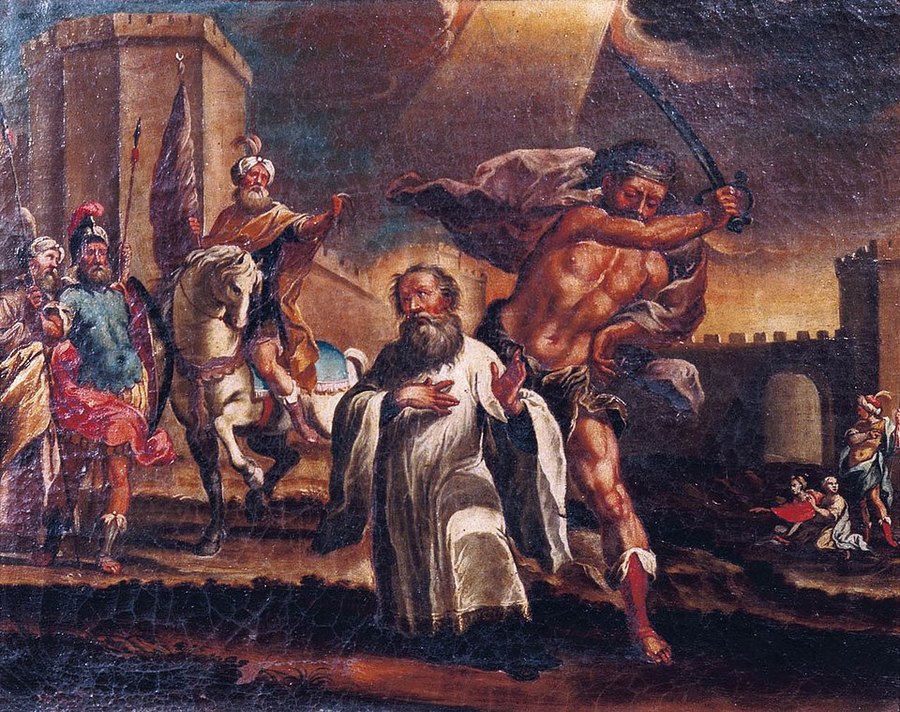
The figure of St. Eulogius of Cordoba is, without a doubt, one of the most outstanding figures of the Hispanic ninth century, because of both his life and his literary production. In fact, together with that of his fellow countrymen Álbaro and Sansón, his literary works are our main source of information about the Christians of Al-Andalus during the period of the emirate. As a result, a tour through his relatively well known biography is an excellent starting point for taking a closer look at the daily life of his community and approaching aspects as relevant as its structure and internal manner of operating, along with the situation and problems of the Church, the state of the Latin culture and its challenges, its contact with the rest of Christianity and, above all, its relations with the Muslim population and authorities. Furthermore, this last topic, and more specifically the famous episode of the voluntary martyrs, will allow us to analyze the tensions which the process of Arabization had created at the heart of the community, as well as the different forms that such changes could adopt in this respect.
Pedro Herrera Roldán
With a PhD in Classical Philology from the University of Cordoba, Herrera Roldán is currently a professor of Latin and Greek at the IES El Brocense high school in Cáceres. For years, his field of study has been focused on the Early Middle Ages, both in Cordoba’s Christian community during the ninth century and in the historical works produced in the post-Roman “barbarian” kingdoms, fields in which he has authored several publications. These include two monographs and several articles mainly about the literary production of the Mozarabic people of Cordoba, but also on the translations of works by St. Eulogius of Cordoba (Akal, 2005), Pablo Diácono (Servicio de Publicaciones de la Universidad de Cádiz, 2006), Gregorio de Tours (Servicio de Publicaciones de la Universidad de Extremadura, 2013, republished in 2022), Widukindo de Corvey (Servicio de Publicaciones de la Universidad de Extremadura, 2016) and Víctor de Vita (Ciudad Nueva, 2022). For the last year, he has been contributing to the magazine Hasta el Tuétano while also a member of the research group Corpus documentale Latinum Hispaniarum 2.
Pedro Herrera Roldán
With a PhD in Classical Philology from the University of Cordoba, Herrera Roldán is currently a professor of Latin and Greek at the IES El Brocense high school in Cáceres. For years, his field of study has been focused on the Early Middle Ages, both in Cordoba’s Christian community during the ninth century and in the historical works produced in the post-Roman “barbarian” kingdoms, fields in which he has authored several publications. These include two monographs and several articles mainly about the literary production of the Mozarabic people of Cordoba, but also on the translations of works by St. Eulogius of Cordoba (Akal, 2005), Pablo Diácono (Servicio de Publicaciones de la Universidad de Cádiz, 2006), Gregorio de Tours (Servicio de Publicaciones de la Universidad de Extremadura, 2013, republished in 2022), Widukindo de Corvey (Servicio de Publicaciones de la Universidad de Extremadura, 2016) and Víctor de Vita (Ciudad Nueva, 2022). For the last year, he has been contributing to the magazine Hasta el Tuétano while also a member of the research group Corpus documentale Latinum Hispaniarum 2.