

Books and publications
Index / Activities / Books and publications / Syria at the Crossroads: Reconstruction and uncertainty
Syria at the Crossroads: Reconstruction and uncertainty
March 04, 20267:00 p.m.
MADRID
Casa Árabe Auditorium (at Calle Alcalá, 62).
7:00 p.m.
Free entry until the event’s capacity is reached.
In Spanish.
On Wednesday, March 4, Casa Árabe will be hosting this round table discussion on the current situation in Syria, as part of its presentation of the latest issue of the journal afkar/ideas. Taking part in the debate will be Leila Nachawati (UC3M), Jesús A. Núñez Villaverde (IECAH), Gabriel Garroum (UPF) and Natalia Sancha (El País). Come listen to the debate.
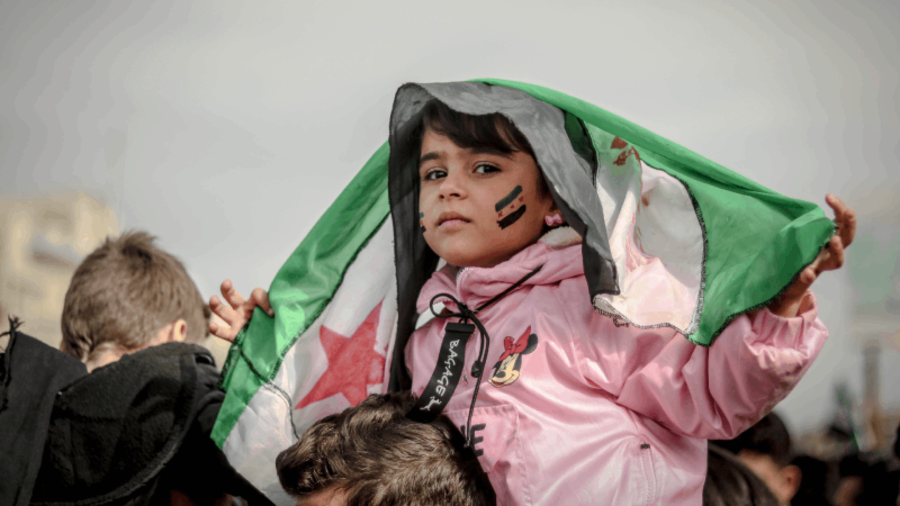
The sudden overthrow of Bashar al-Assad’s regime in late 2024 led to an outburst of both optimism and concern among international observers and Syrians alike. On the one hand, it seemed like it might mark the end of the bloody civil war which had killed hundreds of thousands of Syrians over the course of ten years. On the other, intentions aimed at political reform by the new transitional government, led by the former head of a radical Islamist militia, Ahmed al Shara, were not at all clear.
This state of uncertainty continues to exist one year after the beginning of the transition. It is as of yet unclear whether the new institutions will be able to channel the demands of a pluralistic, fragmented society and thus maintain the stability necessary to reconstruct the country completely. The massacres of ethnic minority groups—the Alawites, Druze, and Kurds—have weakened confidence in the government and increased fears that the lengthy years of conflict that have devastated the country will continue further.
The international situation complicates the reconstruction process even more, with a minimum cost estimated at over €180 billion. Despite the Syrian government’s return to international institutions, symbolized by al-Shara’s speech at the UN and his reception at the White House, the promise of reconstruction faces an international community distracted by other priorities and unwilling to contribute the necessary financial aid.
Organized by IEMed, Política Exterior, Casa Árabe and Aecid in conjunction with the publication of the latest issue of the journal afkar/ideas, the session will be introduced by Miguel Moro Aguilar, the Director of Casa Árabe, Senén Florensa, the Executive Director of IEMed and co-director of afkar/ideas Gaspar Atienza, president of Fundación Análisis de Política Exterior, and Carmen Magariños, Director General for the Maghreb, Mediterranean and Near East at Spain’s Ministry of Foreign Affairs, the European Union and Cooperation.
Taking part in the round table discussion and debate thereafter will be Leila Nachawati, a professor at the Universidad Carlos III de Madrid, Jesús Núñez Villaverde, co-director of the Institute of Studies on Conflicts and Humanitarian Action (IECAH), and Gabriel Garroum Pla, a post-doc researcher at the Universitat Pompeu Fabra (UPF), in a discussion moderated by Natalia Sancha, a journalist who specializes in the Middle East, from El País.
The latest issue of afkar/ideas addresses this dilemma with an incisive intervention by political scientist and journalist Ricard González. Regional uncertainty is one of the main concerns in this issue of the journal. An in-depth analysis of the “peace without peace” that has taken hold in Gaza is its primary focus, including necessary interventions on the peace agreement proposed by the United States, the reconstruction of the Gaza Strip and the portrayal of war in art. This is complemented by a series of articles on the European Union’s role in the tensions within the Maghreb, as well as insights into such diverse and relevant topics as Al Sisi’s megaprojects, the region’s military economies and an assessment of the New Pact for the Mediterranean.
This issue of afkar/ideas addresses the most urgent and complex problems facing the Mediterranean region and asks what conditions would be necessary to establish a real, lasting peace in the Middle East.
Further information on the IEMed website
Downloadable PDF of the journal: afkar/Ideas issue nº 76 (fall/winter 2025)
Program (PDF)
7:00 p.m. Welcome speech
Miguel Moro Aguilar, Director of Casa Árabe
Senén Florensa, Managing Director of IEMed and co-director of afkar/ideas
Gaspar Atienza, President of Fundación Análisis de Política Exterior
Carmen Magariños Casal, Director General for the Maghreb, Mediterranean and Near East at the Ministry of Foreign Affairs, the European Union and Cooperation (yet to be confirmed)
7:30 p.m. Round table discussion
Moderated by: Natalia Sancha, a journalist who specializes in the Middle East, El País
Leila Nachawati, a professor of Communication at the Universidad Carlos III de Madrid
Jesús Núñez Villaverde, co-director of the Institute of Studies on Conflicts and Humanitarian Action (IECAH)
Gabriel Garroum Pla, post-doc researcher, Universitat Pompeu Fabra (UPF)
8:30 p.m. Debate
This state of uncertainty continues to exist one year after the beginning of the transition. It is as of yet unclear whether the new institutions will be able to channel the demands of a pluralistic, fragmented society and thus maintain the stability necessary to reconstruct the country completely. The massacres of ethnic minority groups—the Alawites, Druze, and Kurds—have weakened confidence in the government and increased fears that the lengthy years of conflict that have devastated the country will continue further.
The international situation complicates the reconstruction process even more, with a minimum cost estimated at over €180 billion. Despite the Syrian government’s return to international institutions, symbolized by al-Shara’s speech at the UN and his reception at the White House, the promise of reconstruction faces an international community distracted by other priorities and unwilling to contribute the necessary financial aid.
Organized by IEMed, Política Exterior, Casa Árabe and Aecid in conjunction with the publication of the latest issue of the journal afkar/ideas, the session will be introduced by Miguel Moro Aguilar, the Director of Casa Árabe, Senén Florensa, the Executive Director of IEMed and co-director of afkar/ideas Gaspar Atienza, president of Fundación Análisis de Política Exterior, and Carmen Magariños, Director General for the Maghreb, Mediterranean and Near East at Spain’s Ministry of Foreign Affairs, the European Union and Cooperation.
Taking part in the round table discussion and debate thereafter will be Leila Nachawati, a professor at the Universidad Carlos III de Madrid, Jesús Núñez Villaverde, co-director of the Institute of Studies on Conflicts and Humanitarian Action (IECAH), and Gabriel Garroum Pla, a post-doc researcher at the Universitat Pompeu Fabra (UPF), in a discussion moderated by Natalia Sancha, a journalist who specializes in the Middle East, from El País.
The latest issue of afkar/ideas addresses this dilemma with an incisive intervention by political scientist and journalist Ricard González. Regional uncertainty is one of the main concerns in this issue of the journal. An in-depth analysis of the “peace without peace” that has taken hold in Gaza is its primary focus, including necessary interventions on the peace agreement proposed by the United States, the reconstruction of the Gaza Strip and the portrayal of war in art. This is complemented by a series of articles on the European Union’s role in the tensions within the Maghreb, as well as insights into such diverse and relevant topics as Al Sisi’s megaprojects, the region’s military economies and an assessment of the New Pact for the Mediterranean.
This issue of afkar/ideas addresses the most urgent and complex problems facing the Mediterranean region and asks what conditions would be necessary to establish a real, lasting peace in the Middle East.
Further information on the IEMed website
Downloadable PDF of the journal: afkar/Ideas issue nº 76 (fall/winter 2025)
Program (PDF)
7:00 p.m. Welcome speech
Miguel Moro Aguilar, Director of Casa Árabe
Senén Florensa, Managing Director of IEMed and co-director of afkar/ideas
Gaspar Atienza, President of Fundación Análisis de Política Exterior
Carmen Magariños Casal, Director General for the Maghreb, Mediterranean and Near East at the Ministry of Foreign Affairs, the European Union and Cooperation (yet to be confirmed)
7:30 p.m. Round table discussion
Moderated by: Natalia Sancha, a journalist who specializes in the Middle East, El País
Leila Nachawati, a professor of Communication at the Universidad Carlos III de Madrid
Jesús Núñez Villaverde, co-director of the Institute of Studies on Conflicts and Humanitarian Action (IECAH)
Gabriel Garroum Pla, post-doc researcher, Universitat Pompeu Fabra (UPF)
8:30 p.m. Debate