

Conferences and debates
Index / Activities / Conferences and debates / The Atlantic variant on the Mediterranean migration route: the Africa-Canary Islands "necrocorridor"
The Atlantic variant on the Mediterranean migration route: the Africa-Canary Islands "necrocorridor"
January 27, 20267:00 p.m.
MADRID
Casa Árabe Auditorium (at Calle Alcalá, 62).
7:00 p.m.
Free entry until the event’s capacity is reached.
In English, with simultaneous translation into Spanish.
We are now resuming the sessions of the Aula Árabe Universitaria 7 event series with this eighth lecture, given by Mohammed Ouhemmou, a professor at Ibn Zohr University in Agadir (Morocco). It will be taking place in Madrid on Tuesday, January 27. Come watch the event in person or do so by going to our YouTube channel.
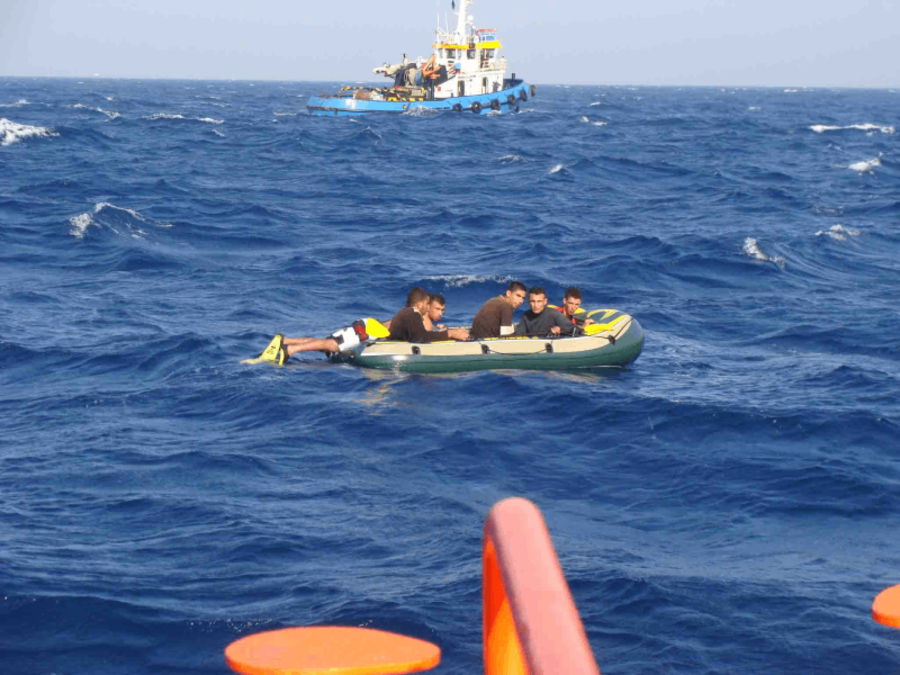
The Atlantic variant of the Africa and the Canary Islands migration route, which can stretch as long as 1,600 kilometers, requiring several weeks of sailing, is one of the deadliest corridors forming part of Mediterranean migration paths. While, in a broad sense, the term “migration corridors” refers to the routes taken by migrants (influenced by various factors of a geopolitical, social and environmental nature), the concept “necrocorridors” refers to those routes which are particularly dangerous or deadly for migrants. This seems to imply that not all migration corridors are death corridors.
At this conference, Prof. Mohammed Ouhemmou will be proposing a model for understanding the processes of death corridor formation; in other words, the conditions which cause a migration corridor to become classified as a specific necrocorridor, thereby contributing to the already extensive debate on “death politics.” Highlighting the specificity of the Canary Islands corridor, Ouhemmou combines the concept of death politics with Judith Butler’s theory of “grievability,” which argues that in certain societies not all lives are considered equally worthy of mourning. She does so in order to analyze how structural, political and media-based negligence systematically serves to prevent mourning and memory. He also takes a second look at some of the arguments raised in debates on global justice.
The conference will be divided into three parts. First of all, there will be a conceptual and theoretical section in which the professor introduces the idea of “death politics” and argues why the Canary Islands corridor is particularly illustrative of that concept. Secondly, he will expound upon the methodology, data sources and theoretical model of the necrocorridor that he has developed. And last of all, in a third empirical section, he will present a model for the necrocorridor based on data and ethnographic material from his field study.
His central argument is that the necrocorridor is a political construct which ends up trivialized through the very policies that create it, in conjunction with the roles played by the media and public opinion.
Mohammed Ouhemmou
Mohammed Ouhemmou is an assistant professor at Ibn Zohr University in Agadir, Morocco, and a member of the Euro-Mediterranean Migration Research Network (EuroMedMig). His areas of interest include public policy analysis, migration and internationalization policies. His research examines the link between foreign policy and mobility policies, as well as educational mobility policies from sub-Saharan Africa to Morocco, focusing on how African students at Moroccan universities cross and negotiate symbolic and social borders.
He has had numerous articles published on international mobility and migration policies in Morocco and North Africa, including: “Tense Neighbors: Algeria and Morocco have divergent migration histories” (2023), “Migration, Governance and Geopolitical Conflicts in Africa: A comparative analysis of Moroccan and Algerian migration policies” (2021), “Migration and Integration Policy in Morocco: The intersection between culture and public policy-making” (2020) and Comparative analysis of Migration Policies and Social Transformations in the MENA region” (2020).
At this conference, Prof. Mohammed Ouhemmou will be proposing a model for understanding the processes of death corridor formation; in other words, the conditions which cause a migration corridor to become classified as a specific necrocorridor, thereby contributing to the already extensive debate on “death politics.” Highlighting the specificity of the Canary Islands corridor, Ouhemmou combines the concept of death politics with Judith Butler’s theory of “grievability,” which argues that in certain societies not all lives are considered equally worthy of mourning. She does so in order to analyze how structural, political and media-based negligence systematically serves to prevent mourning and memory. He also takes a second look at some of the arguments raised in debates on global justice.
The conference will be divided into three parts. First of all, there will be a conceptual and theoretical section in which the professor introduces the idea of “death politics” and argues why the Canary Islands corridor is particularly illustrative of that concept. Secondly, he will expound upon the methodology, data sources and theoretical model of the necrocorridor that he has developed. And last of all, in a third empirical section, he will present a model for the necrocorridor based on data and ethnographic material from his field study.
His central argument is that the necrocorridor is a political construct which ends up trivialized through the very policies that create it, in conjunction with the roles played by the media and public opinion.
Organized with the cooperation of the IEMed's Aula Mediterrània program and with the Master's Degree in International Relations and African Studies at the Universidad Autonoma de Madrid, Marta Iñiguez, a professor and the coordinator of the program, will be taking part and introducing the speaker on behalf of the program. Moderating the session will be Olivia Orozco, Casa árabe's Training and Economics Coordinator.
Mohammed Ouhemmou
Mohammed Ouhemmou is an assistant professor at Ibn Zohr University in Agadir, Morocco, and a member of the Euro-Mediterranean Migration Research Network (EuroMedMig). His areas of interest include public policy analysis, migration and internationalization policies. His research examines the link between foreign policy and mobility policies, as well as educational mobility policies from sub-Saharan Africa to Morocco, focusing on how African students at Moroccan universities cross and negotiate symbolic and social borders.
He has had numerous articles published on international mobility and migration policies in Morocco and North Africa, including: “Tense Neighbors: Algeria and Morocco have divergent migration histories” (2023), “Migration, Governance and Geopolitical Conflicts in Africa: A comparative analysis of Moroccan and Algerian migration policies” (2021), “Migration and Integration Policy in Morocco: The intersection between culture and public policy-making” (2020) and Comparative analysis of Migration Policies and Social Transformations in the MENA region” (2020).