

Courses and Workshops
Index / Activities / Courses and Workshops / Workshops on “Decorated Cities”: Embroidering at Casa Árabe with the family
Workshops on “Decorated Cities”: Embroidering at Casa Árabe with the family
From October 10, 2025 until November 22, 2025The workshops will be held on the Saturdays indicated below, from 11:30 a.m. to 1:30 p.m.
MADRID
Casa Árabe headquarters (at Calle Alcalá, 62).
The workshops will be held on the Saturdays indicated below, from 11:30 a.m. to 1:30 p.m.
Price: 5 euros per person and workshop. Materials included. No more than 15 people per workshop.
In Spanish.
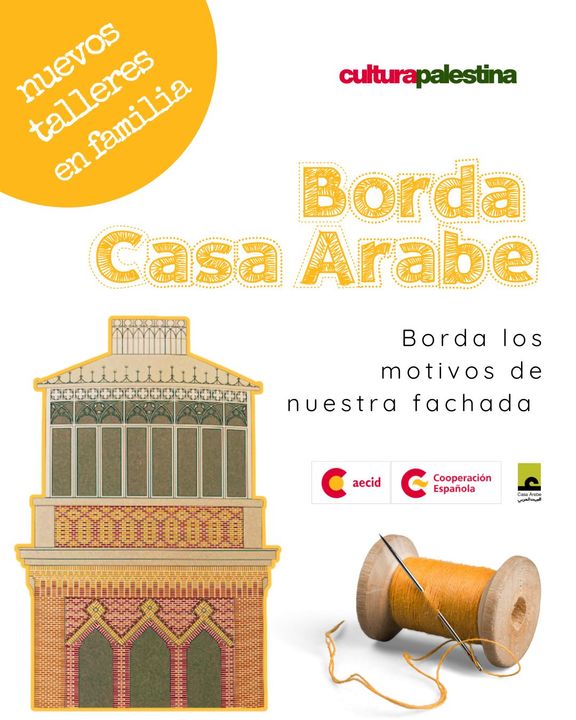
Starting on October 25, Casa Árabe is organizing five family workshops at its headquarters in Madrid to discover the relationship between the geometry of the bricks on our building’s façade and the cultural identity in Neo-Mudéjar art, giving it the color lent by embroidery. Sign up and come embroider with us!
The “Decorated Cities” workshops, intended for children and families, has the purpose of creating a space for creative reflection on our cities’ cultural heritage and their architecture, putting into action a knowledge of aesthetics and its relationship with the humanities.
This time around, they will be focusing on Casa Árabe’s Madrid headquarters, inside a building known as the “Aguirre Schools,” declared a Site of Cultural Interest in February 2025 and considered to be one of the main examples of Neo-Mudéjar architecture in the city, a highly complex and expressive historicist trend which emerged in the late nineteenth century. This style revived elements of the Islamic architectural tradition on the Iberian Peninsula, with features such as exposed brickwork, horseshoe arches and geometric decorations which evoke the legacy of Al-Andalus.
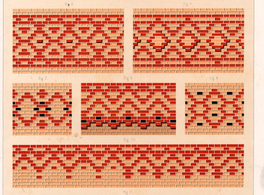
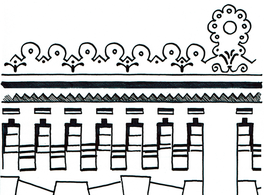
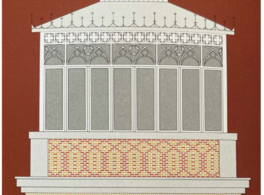
The building, located on Calle Alcalá next to the northern entrance to the Retiro Park, is currently included within the boundaries of Madrid’s Paisaje de la Luz (“Landscape of Light”), declared a World Heritage Site by UNESCO in 2021. Designed by architect Emilio Rodríguez Ayuso, its construction, completed in 1886, used load-bearing brick walls laid out in a Spanish bond pattern that included several façade decorations placed with recesses and outcroppings. Its most characteristic feature is the exposed brick outer wall, a fine example of how architects of the time were able to make the most of patterned ceramics. They conceal a complicated internal layout of bricks and joints.
Based on its characteristic exposed brick façade, the workshops will explore the historical and artistic value of the building and its cultural identity as an example of architecture embellished through universal elements of humanity, such as:
• Geometric knowledge applied as a tool
• Ornamentation that evokes patterns from the art of embroidery
• Brick, an element on a human scale that is easy to work with
The purpose is two-fold: to spur public debate over the importance of education and awareness about cultural heritage, and to promote the development of soft skills through artistic production, the strengthening of creativity, collaboration and personal expression.
Methodology
The methodology of these workshops involves taking a closer look at crafts and artistic practices, from their own scale, based on their everyday nature. This approach seeks to incite conversations about our aesthetic tradition and reflect upon what these forms of expression can tell us about who we are as a society and where we come from.
The way we decorate our cities reflects the way in which we tell our own stories. Ornamentation, creativity and cultural identity are all deeply intertwined, providing a mirror for both society and for ourselves.
Workshop dynamics
The workshops are based on three basic parts:
The workshops will promote profound reflection on the concepts of cultural heritage from the vantage point of everyday life. Heritage has stories to tell, expresses feelings and defines who we are as individuals and as a society. By becoming familiar with it, we can integrate it into our identity, which motivates us to preserve it.
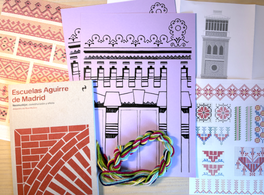
The central portion of each workshop will focus on artistic production by including activities related with the three proposed pillars: geometries, the art of embroidery with its richness of colors, patterns and social practices, and working with natural materials such as mud and clay. These activities seek to connect the items we use and the people we interact with, giving them a deeper meaning in our experience.
The workshops will end with a community activity that brings together artistic production and personal reflections, along with an evaluation of the activity. Getting inspiration from the filandón and drawing parallels with the Palestinian hikaye (a traditional narrative expression practised by women, usually grandmothers, in which stories are told to children on winter nights) and with other forms of oral transmission in the Mediterranean, we propose a shared practice that allows participants to create joint narratives and explore the construction of imagined architectures. This moment will also include an evaluation of the activity, with the purpose of consolidating and highlighting all of the teachings passed on.
The public
The workshops will be providing an introductory experience and are designed to encourage intergenerational participation.
They will be taught to a single group in which people of different ages get to work together on the same activity.
It is mainly intended for families with children between the ages of 7 and 12, accompanied by adults.
The event is being held as part of the project “Threads of the Diaspora,” for the recovery and dissemination of heritage related to traditional Palestinian embroidery and cultural exchanges in the Mediterranean.
This program has been given support by the Spanish Agency for International Development Cooperation (AECID).

This time around, they will be focusing on Casa Árabe’s Madrid headquarters, inside a building known as the “Aguirre Schools,” declared a Site of Cultural Interest in February 2025 and considered to be one of the main examples of Neo-Mudéjar architecture in the city, a highly complex and expressive historicist trend which emerged in the late nineteenth century. This style revived elements of the Islamic architectural tradition on the Iberian Peninsula, with features such as exposed brickwork, horseshoe arches and geometric decorations which evoke the legacy of Al-Andalus.
The building, located on Calle Alcalá next to the northern entrance to the Retiro Park, is currently included within the boundaries of Madrid’s Paisaje de la Luz (“Landscape of Light”), declared a World Heritage Site by UNESCO in 2021. Designed by architect Emilio Rodríguez Ayuso, its construction, completed in 1886, used load-bearing brick walls laid out in a Spanish bond pattern that included several façade decorations placed with recesses and outcroppings. Its most characteristic feature is the exposed brick outer wall, a fine example of how architects of the time were able to make the most of patterned ceramics. They conceal a complicated internal layout of bricks and joints.
Based on its characteristic exposed brick façade, the workshops will explore the historical and artistic value of the building and its cultural identity as an example of architecture embellished through universal elements of humanity, such as:
• Geometric knowledge applied as a tool
• Ornamentation that evokes patterns from the art of embroidery
• Brick, an element on a human scale that is easy to work with
The purpose is two-fold: to spur public debate over the importance of education and awareness about cultural heritage, and to promote the development of soft skills through artistic production, the strengthening of creativity, collaboration and personal expression.
Methodology
The methodology of these workshops involves taking a closer look at crafts and artistic practices, from their own scale, based on their everyday nature. This approach seeks to incite conversations about our aesthetic tradition and reflect upon what these forms of expression can tell us about who we are as a society and where we come from.
The way we decorate our cities reflects the way in which we tell our own stories. Ornamentation, creativity and cultural identity are all deeply intertwined, providing a mirror for both society and for ourselves.
Workshop dynamics
The workshops are based on three basic parts:
The workshops will promote profound reflection on the concepts of cultural heritage from the vantage point of everyday life. Heritage has stories to tell, expresses feelings and defines who we are as individuals and as a society. By becoming familiar with it, we can integrate it into our identity, which motivates us to preserve it.
The central portion of each workshop will focus on artistic production by including activities related with the three proposed pillars: geometries, the art of embroidery with its richness of colors, patterns and social practices, and working with natural materials such as mud and clay. These activities seek to connect the items we use and the people we interact with, giving them a deeper meaning in our experience.
The workshops will end with a community activity that brings together artistic production and personal reflections, along with an evaluation of the activity. Getting inspiration from the filandón and drawing parallels with the Palestinian hikaye (a traditional narrative expression practised by women, usually grandmothers, in which stories are told to children on winter nights) and with other forms of oral transmission in the Mediterranean, we propose a shared practice that allows participants to create joint narratives and explore the construction of imagined architectures. This moment will also include an evaluation of the activity, with the purpose of consolidating and highlighting all of the teachings passed on.
The public
The workshops will be providing an introductory experience and are designed to encourage intergenerational participation.
They will be taught to a single group in which people of different ages get to work together on the same activity.
It is mainly intended for families with children between the ages of 7 and 12, accompanied by adults.
The event is being held as part of the project “Threads of the Diaspora,” for the recovery and dissemination of heritage related to traditional Palestinian embroidery and cultural exchanges in the Mediterranean.
This program has been given support by the Spanish Agency for International Development Cooperation (AECID).
Workshop and meeting calendar:
Saturday, October 25, 2025 “Embroidering Casa Árabe” workshop number 1, 11:30 a.m. - 1:30 p.m. SOLD OUT
Saturday, November 8, 2025 “Embroidering Casa Árabe” workshop number 2, 11:30 a.m. - 1:30 p.m. TICKETS
Saturday, November 15, 2025 “Embroidering Casa Árabe” workshop number 3, 11:30 a.m. - 1:30 p.m. SOLD OUT
Saturday, November 22, 2025 “Embroidering Casa Árabe” workshop number 4, 11:30 a.m. - 1:30 p.m. TICKETS
Saturday, November 29, 2025 “Embroidering Casa Árabe” workshop number 5, 11:30 a.m. - 1:30 p.m. TICKETS
Saturday, October 25, 2025 “Embroidering Casa Árabe” workshop number 1, 11:30 a.m. - 1:30 p.m. SOLD OUT
Saturday, November 8, 2025 “Embroidering Casa Árabe” workshop number 2, 11:30 a.m. - 1:30 p.m. TICKETS
Saturday, November 15, 2025 “Embroidering Casa Árabe” workshop number 3, 11:30 a.m. - 1:30 p.m. SOLD OUT
Saturday, November 22, 2025 “Embroidering Casa Árabe” workshop number 4, 11:30 a.m. - 1:30 p.m. TICKETS
Saturday, November 29, 2025 “Embroidering Casa Árabe” workshop number 5, 11:30 a.m. - 1:30 p.m. TICKETS
Concha Maza is an architect and cultural manager currently researching the social value of cultural heritage and organizations.
https://www.linkedin.com/in/conchamaza
https://www.linkedin.com/in/conchamaza
Related content
Anterior
Siguiente
Family Workshop: Decorated cities
On Saturday, October 25, we will be hosting the first in a series of
embroidery workshops that will allow young and old alike to discover the
relationship between heritage, geometry and embroidery. Buy your ticket
now and come embroider with your family!
October 25, 2025
MADRID
Another family friendly workshop on embroidery, architecture and heritage
In November, our family workshops will be continuing, in order to
explore the relationship between heritage and geometry through
embroidery. Bring the whole family, both young and old, and come
embroider with us!
November 8, 2025
MADRID
Third family workshop on embroidery and architecture
On November 15, you will have another opportunity to embroider with the
family at Casa Árabe. Discover the relationship between the geometry of
the bricks on our façade and cultural identity in Neo-Mudéjar art by
taking part in this activity. Come join us!
November 15, 2025
MADRID
Last family embroidery workshop at Casa Árabe
On November 29, our series of workshops for learning about the
relationship between heritage, architecture and geometry through family
friendly embroidery sessions will be coming to an end. Don’t miss this
last chance to come and embroider together, and sign up now!
November 29, 2025
MADRID