

Courses and Workshops
Index / Activities / Courses and Workshops / Final Palestinian embroidery workshop
Final Palestinian embroidery workshop
October 24, 2025The workshop will be held on Friday, October 24, from 5:30 to 7:30 p.m.
MADRID
Casa Árabe headquarters (at Calle Alcalá, 62).
The workshop will be held on Friday, October 24, from 5:30 to 7:30 p.m.
Price: 5 euros for each workshop. Materials included.
No more than 20 people per workshop.
In Spanish.
TICKETS SOLD OUT. Friday, October 24 will be the last chance to learn about Palestinian embroidery (tatreez) from three embroiderers who are also refugees in Spain. If you haven’t participated yet, don’t miss this opportunity. We hope to see you there!
At the workshops, we will be learning about traditional Palestinian embroidery (tatreez), how it is practiced and its meanings in the different regions of historical Palestine, through teaching by three Palestinian women embroiderers who are also refugees in Spain: Avo Zoughbi (Belén), Dalia Kayed (Gaza) and Saja Abdalhadi (Tulkarem).
The workshop has been organized as part of the “Threads of the Diaspora” project, designed as spaces for meeting and sharing, where we will get the opportunity to talk with these refugees and learn how to embroider some of the typical patterns from these regions. Each of them will be proposing four patterns from their respective regions, with varying degrees of complexity, so that we can continue embroidering together for Palestine and keep this unique cultural heritage alive.
This program is supported by the Spanish Agency for International Development Cooperation (AECID).

The workshop has been organized as part of the “Threads of the Diaspora” project, designed as spaces for meeting and sharing, where we will get the opportunity to talk with these refugees and learn how to embroider some of the typical patterns from these regions. Each of them will be proposing four patterns from their respective regions, with varying degrees of complexity, so that we can continue embroidering together for Palestine and keep this unique cultural heritage alive.
This program is supported by the Spanish Agency for International Development Cooperation (AECID).

Related content
Anterior
Siguiente
In October, let’s embroider for Palestine together
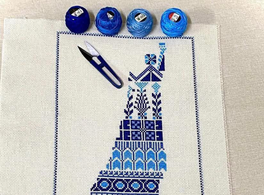
Each Friday in October, we will once again be embroidering together for Palestine, with three embroiderers who are refugees in Spain. We will be resuming our workshops on tatreez (Palestinian embroidery) as part of the “Threads of the Diaspora” project, with this series of four event from October 3 through 24. Don’t miss out and sign up now!
From September 22, 2025 until October 24, 2025
MADRID