

Courses and Workshops
Index / Activities / Courses and Workshops / In October, let’s embroider for Palestine together
In October, let’s embroider for Palestine together
From September 22, 2025 until October 24, 2025The workshops will be taking place on the dates of October 3, 10, 17 and 24, from 5:30 to 7:30 p.m.
MADRID
Casa Árabe headquarters (at Calle Alcalá, 62).
The workshops will be taking place on the dates of October 3, 10, 17 and 24, from 5:30 to 7:30 p.m.
Price: 5 euros for each workshop.
Materials included. No more than 20 people per workshop.
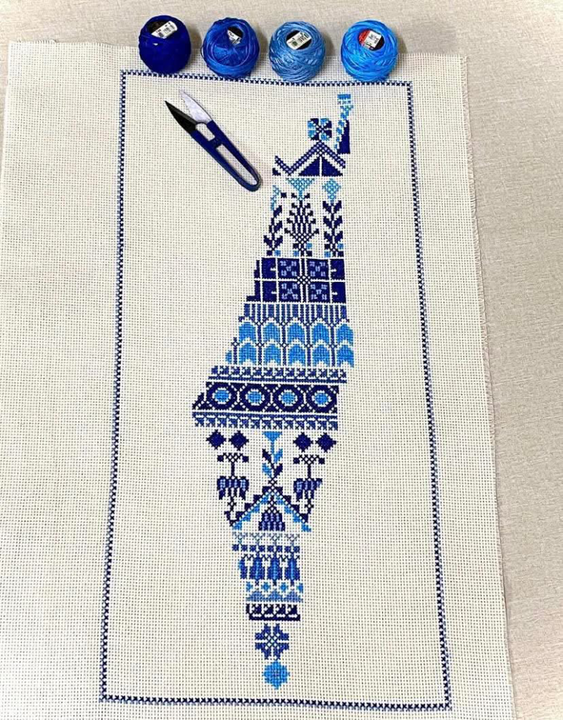
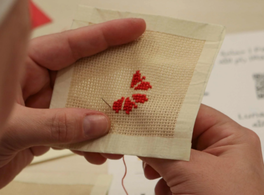
Each Friday in October, we will once again be embroidering together for Palestine, with three embroiderers who are refugees in Spain. We will be resuming our workshops on tatreez (Palestinian embroidery) as part of the “Threads of the Diaspora” project, with this series of four event from October 3 through 24. Don’t miss out and sign up now!
At the workshops, which form part of the “Threads of the Diaspora” project, we will be learning about traditional Palestinian embroidery (tatreez), how it is practiced and its meanings in the different regions of historical Palestine, through teaching by three Palestinian women embroiderers who are also refugees in Spain: Avo Zoughbi (Belén), Dalia Kayed (Gaza) and Saja Abdalhadi (Tulkarem).
The workshops have been designed as spaces for meeting and sharing, where we will get the opportunity to talk with these refugees and learn how to embroider some of the typical patterns from these regions. Each of them will be proposing four patterns from their respective regions, with varying degrees of complexity, so that we can continue embroidering together for Palestine and keep this unique cultural heritage alive.
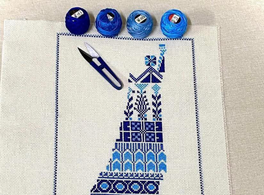
This tatreez, traditional Palestinian embroidery, declared since 2021 to be a form of Intangible Immaterial Heritage by UNESCO, is a Palestinian folk art traditionally practiced by women. It has now become a symbol of Palestinian culture, identity and resistance. A space for interaction shared along with similar customs and artistic practices from other regions in the Arab world and Mediterranean. Tatreez was used to decorate dresses, with specific shapes, colors and motifs that helped identify the region and place where they were woven in historic Palestine.
In line with previous workshops held over the last two years, the aim of this new series of workshops and meetings is to raise awareness about the different varieties and dimensions of tatreez, its significance in terms of Palestinian identity and culture, and to create networks of cultural resistance and solidarity from different parts of the world. In addition to being a form of art and cultural expression, it is also a means of survival, especially for many Palestinian women in the diaspora.
This program is supported by the Spanish Agency for International Development Cooperation (AECID).
Avo Zoughbi
Avo is a 40-year-old Palestinian woman from Bethlehem who works as a beautician. She began learning embroidery at the age of four, watching her mother, aunt and grandmother make embroidery. She still remembers the first piece she made for Christmas, shaped like a snowman. She then began to learn embroidery at school. For her, embroidery forms part of her national culture. With each thread, she sees her mother’s eyes, hears her grandmother’s voice and feels her aunt’s touch. She sees her homeland.
Avo is a 40-year-old Palestinian woman from Bethlehem who works as a beautician. She began learning embroidery at the age of four, watching her mother, aunt and grandmother make embroidery. She still remembers the first piece she made for Christmas, shaped like a snowman. She then began to learn embroidery at school. For her, embroidery forms part of her national culture. With each thread, she sees her mother’s eyes, hears her grandmother’s voice and feels her aunt’s touch. She sees her homeland.
Dalia Kayed
Dalia Khayed Hammad is a 20-year-old Palestinian from the Gaza Strip and a digital media student. She reached Spain in June 2025. Her journey with embroidery began at the age of ten, when she learned this authentic art from her aunt, to whom it had been passed down from her grandmother. This experience connected her to an unbroken chain of women creating this cultural heritage. For Dalia, embroidery is more than just a hobby: it is a profound expression of her identity and an authentic form of cultural heritage. It also brings her psychological comfort and joy in her free time. During the war, embroidery became her form of resistance, a silent language through which she expresses her voice and the history of her people to the rest of the world.
Saja Abdalhadi
Saja Abdalhadi is a young woman from Tulkarem, Palestine who arrived in Madrid in October 2023. She is currently a refugee in the final stage of her asylum process. She has worked as an Arabic language teacher, also teaching foreigners, as well as in the media, preparing television and radio programs, in addition to proofreading texts. She learned embroidery from her mother, who taught her this skill, which was also her profession in Palestine, where she helped women to make embroidery and start their own projects in this field. Like her mother, she believes that embroidery is a fundamental part of Palestine’s heritage and identity, which the occupation is trying to appropriate. For this reason, embroidery, especially that of traditional Palestinian forms of dress, was registered as such. In her free time, she would work with her mother on embroidery, convinced that with each stitch she was reinforcing her heritage, her identity and her homeland.
WORKSHOP CALENDAR
Friday, October 3, 2025 Palestinian refugee women embroiderers 1, 5:30 - 7:30 p.m. TICKETS SOLD OUT
Friday, October 10, 2025 Palestinian refugee women embroiderers 2, 5:30 - 7:30 p.m. TICKETS AVAILABLE
Friday, October 17, 2025 Palestinian refugee women embroiderers 3, 5:30 - 7:30 p.m. TICKETS SOLD OUT
Friday, October 24, 2025 Palestinian refugee women embroiderers 4, 5:30 - 7:30 p.m. TICKETS SOLD OUT
Related content
Anterior
Siguiente
First Palestinian embroidery workshop this fall
TICKETS SOLD OUT. On Friday, October 3, we will be bringing back our Palestinian embroidery workshops as part of the project “Threads of the Diaspora.” This time around, we will be joined by three Palestinian refugees in Spain. Buy your ticket now and come embroider for Palestine.
October 3, 2025
MADRID
Another opportunity to embroider for Palestine
SOLD OUT. On Friday, October 10, we will be continuing to embroider for Palestine,
guided by three embroiderers who are also refugees in Spain: Avo
Zoughbi, Dalia Kayed and Saja Abdalhadi. Join us and participate in
these events devoted to Palestinian cultural heritage. Sign up now!
October 10, 2025
MADRID
We continue embroidering for Palestine
TICKETS SOLD OUT. On Friday, October 17, we will continue practicing
traditional Palestinian embroidery (tatreez) guided by three
embroiderers who are refugees in Spain. Come discover some of the
typical patterns from their places of origin and embroider your
favorite.
October 17, 2025
MADRID
Final Palestinian embroidery workshop
TICKETS SOLD OUT. Friday, October 24 will be the last chance to learn
about Palestinian embroidery (tatreez) from three embroiderers who are
also refugees in Spain. If you haven’t participated yet, don’t miss this
opportunity. We hope to see you there!
October 24, 2025
MADRID