

Conferences and debates
Index / Activities / Conferences and debates / The Alhambra and Women: Essence and Presence
The Alhambra and Women: Essence and Presence
June 17, 20267:00 p.m.
CORDOBA
Casa Árabe Auditorium (at Calle Samuel de los Santos Gener, 9).
7:00 p.m.
Free entry until the event’s capacity is reached.
In Spanish.
Professor Bárbara Boloix Gallardo, from the University of Granada, will be giving the final conference in the event series “Seven Women Talk About Al-Andalus.” It will be taking place at our Cordoba headquarters on Wednesday, June 17. Come listen to her and discover the mark that Nasrid women made and left behind on the monument.
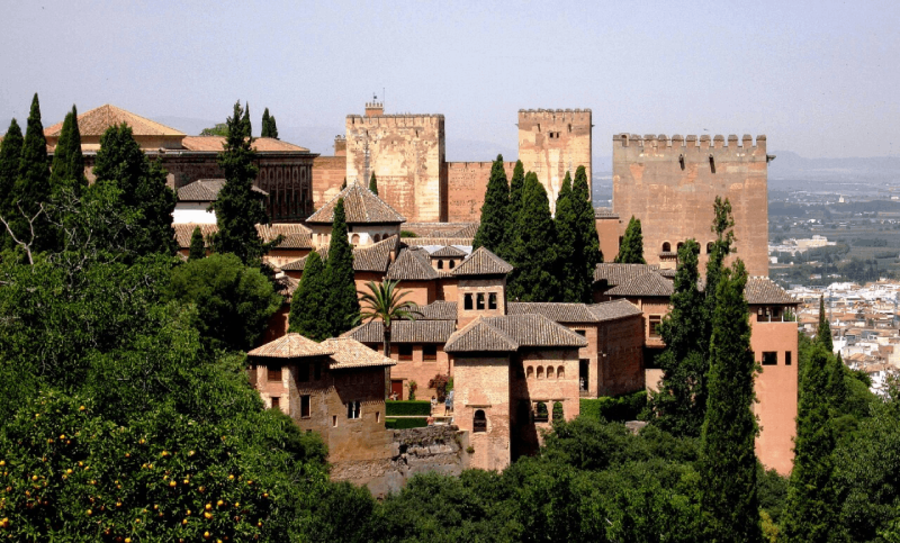
The Alhambra, being the ultimate expression of the Nasrid dynasty’s place in history, was a site where both men and women played a role throughout the history of the Kingdom of Granada (thirteenth-fifteenth centuries). Despite their deliberate historiographical “veiling,” women came to exert considerable influence not only on political and diplomatic developments but also on the spatial and aesthetic configuration of this palace and the evolution of its poetic metaphor, in a way of analyzing and reconstructing which would be impossible today without looking through the lens of gender perspective.
Throughout this presentation, Prof. Boloix Gallardo will be seeking to identify the female presence in the Alhambra complex within its political, architectural, pictorial, and symbolic spheres, with the goal of contributing to a better understanding of the importance of the mark that Nasrid women made and left behind on this monument.
Bárbara Boloix Gallardo holds a European PhD in Arabic Philology from the University of Granada and the University of London (2007). She is currently a professor of Arabic and Islamic Studies with the University of Granada’s Department of Semitic Studies. From 2010 to 2012, she completed her postdoctoral research fellowship at Washington University in St. Louis (Missouri, USA), where she also taught in the Departments of History and Romance Languages and Literatures, as well as teaching an annual course about the History of Al-Andalus.
Both her teaching and research focus on the history of Al-Andalus and the Maghreb, and in particular on the Nasrid Kingdom of Granada, which she approaches from a gender and interdisciplinary perspective, fields about which she has authored several publications, conferences and contributions to congresses both in Spain and abroad.
For several years now, she has been devoting her time to studying Andalusi and Maghrebi women, which has resulted in various publications, including several academic articles, book chapters and, most notably, the monograph titled “The Sultanas of the Alhambra: The great unknowns of the Nasrid Kingdom of Granada (thirteenth-fifteenth centuries)” (published by Editorial Comares-Patronato de la Alhambra y el Generalife, 2013). She has served as the Principal Investigator on various research projects, including the Ministry of Economy and Competitiveness’s R&D&I Project of Excellence on “Nasrid and Merinid Women in Medieval Mediterranean Islamic Societies (thirteenth-fifteenth centuries): Power, identity and social dynamics” (NAZAMER) and the Ministry of Science and Innovation’s R&D&I knowledge-generation project “From Nasrid Women to Morisco Women: everyday life, influences and sociocultural (dis)continuities in the ‘intrahistory’ of the Iberian Peninsula (thirteenth-sixteenth centuries),” which have formed the foundation for her research on these women’s issues.
She is currently a member of the University Institute for Research on Women’s and Gender Studies at the University of Granada, and Deputy Secretary for Cultural and Institutional Cooperation at the Euro-Arab Foundation, where she also directs the Chair of Gender Studies.
Throughout this presentation, Prof. Boloix Gallardo will be seeking to identify the female presence in the Alhambra complex within its political, architectural, pictorial, and symbolic spheres, with the goal of contributing to a better understanding of the importance of the mark that Nasrid women made and left behind on this monument.
Bárbara Boloix Gallardo holds a European PhD in Arabic Philology from the University of Granada and the University of London (2007). She is currently a professor of Arabic and Islamic Studies with the University of Granada’s Department of Semitic Studies. From 2010 to 2012, she completed her postdoctoral research fellowship at Washington University in St. Louis (Missouri, USA), where she also taught in the Departments of History and Romance Languages and Literatures, as well as teaching an annual course about the History of Al-Andalus.
Both her teaching and research focus on the history of Al-Andalus and the Maghreb, and in particular on the Nasrid Kingdom of Granada, which she approaches from a gender and interdisciplinary perspective, fields about which she has authored several publications, conferences and contributions to congresses both in Spain and abroad.
For several years now, she has been devoting her time to studying Andalusi and Maghrebi women, which has resulted in various publications, including several academic articles, book chapters and, most notably, the monograph titled “The Sultanas of the Alhambra: The great unknowns of the Nasrid Kingdom of Granada (thirteenth-fifteenth centuries)” (published by Editorial Comares-Patronato de la Alhambra y el Generalife, 2013). She has served as the Principal Investigator on various research projects, including the Ministry of Economy and Competitiveness’s R&D&I Project of Excellence on “Nasrid and Merinid Women in Medieval Mediterranean Islamic Societies (thirteenth-fifteenth centuries): Power, identity and social dynamics” (NAZAMER) and the Ministry of Science and Innovation’s R&D&I knowledge-generation project “From Nasrid Women to Morisco Women: everyday life, influences and sociocultural (dis)continuities in the ‘intrahistory’ of the Iberian Peninsula (thirteenth-sixteenth centuries),” which have formed the foundation for her research on these women’s issues.
She is currently a member of the University Institute for Research on Women’s and Gender Studies at the University of Granada, and Deputy Secretary for Cultural and Institutional Cooperation at the Euro-Arab Foundation, where she also directs the Chair of Gender Studies.